English Essentials II: Unit I: Oral Communication
Short Presentations
Professionals need to make oral presentations in many formal occasions such as meeting, conferences, panel discussions, seminars, etc. while working in an organisation.
SHORT PRESENTATIONS
Professionals
need to make oral presentations in many formal occasions such as meeting,
conferences, panel discussions, seminars, etc. while working in an
organisation. Also, there may arise occasions in which one will have to present
reports and express opinions/ decisions about certain viewpoints. Though we
feel more at ease in spoken communication, than in written communication,
presentations in formal contexts demand conscious effort and careful
preparation. In fact, thorough preparation is the antidote for nervousness.
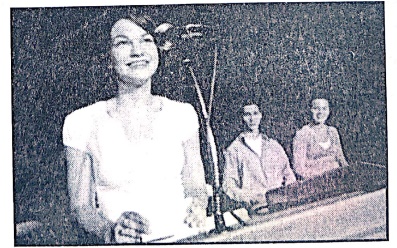
Before
making an oral presentation, the following points should be given due
attention.
(i) Analysing Audience and Locale
(a)
Awareness of your audience (Who are they?) What are their needs or interests?
What do they expect from you? Only then you can make sure what you say is
interesting and relevant to your audience.
(b)
Awareness of the Locale (A prior visit to the place of presentation will help
the presenter get an idea about the ambience and he can also make some
modifications in certain things like lighting, visual aid, arrangement of
chairs etc., if necessary.
(ii) Organising Contents
The
presentation should have a clear structure with a proper introduction and a
conclusion. The contents should be organised with a sense of time in such a way
as to give due importance to each and every part. There should be a clear
connection between different parts or ideas. This can be done by using linkers
or sequence words.
(iii) Preparing an Outline
An
outline helps one to organise the contents in a clear and comprehensible
format. Familiarity with the outline helps the presenter to present the ideas
without forgetting, in a sequence. In addition, it will also prepare the
listeners by giving them an idea about what they are going to listen.
(iv) Visual Aids
In
using visual aids these points have to be paid attention:
(a)
Use of relevant graphical illustrations like pie chart, bar chart, tables,
graph, pictures, etc.
(b)
Familiarity in handling the equipment - OHP, LCD etc.
(c)
Coherence between the visual aid and the text.
(d)
Checking for proper lighting and clarity.
(e)
should not use too many ideas in a single slide.
(v) Understanding Nuances of Delivery
In
delivering the presentation, using both verbal and non-verbal skills in correct
proportion is essential.
Verbal Skill:
Use of clear, simple and natural spoken language with appropriate intonation
and pauses for emphasis.
Non-Verbal Skill:
Use of eye contact with the audience, formal attire, strong, clear gestures for
emphasis, positive, confident and relaxed posture.
Points to rememebr for
an effective presentation:
•
Analyse the audience - whether he is a lay man or a man with the technical
know-how.
•
Choose words according to the situation.
•
Use brief, simple, comprehensible words.
•
Time the delivery in a logical sequence and back up with actions, visuals and
if possible, include three-dimensional models in motion.
•
Create a climate of trust and confidence by using charm and an easy-going
attitude.
•
Take care to exhibit positive body gestures like facial expressions, eye
contact, etc.
•
Train the tone and modulation to be persuasive not authoritative or monotonous
or dull. A charming countenance with a slight smile will be an asset to the
person making the presentation.
•
Have the key points of your presentation handy to trigger your thoughts as you
speak.
•
Always make your presentation interactive and that will help steer the delivery
based on audiences' need and expectations.
•
Use appropriate visual aids. Reports say that only 11% of what we learn is
through hearing, 83% is through sight, 6% through the other senses. One picture
is worth more than ten thousand words.
•
Encourage audience participation making. Allow the audience to ask questions and
sometimes allow them to answer also. When you have to reply, do it with
confidence in a clear way. Do not get perturbed even if one of the audiences
asks a provoking question.
If
one takes care of all these criteria, then the presentation will be effective
and successful. There is no magic formula to make an effective presentation
other than adequate planning and preparation.
TASK
I. Fill in the blanks
with the suitable form of the verb given in brackets. Using the information
given, prepare a short presentation on the topic," The importance of
Mother Tongue" and present before the class.
THE VALUE OF THE MOTHER
TONGUE
The
1950s and 60s were the heydays of Tamil. In 1956 when a college ______ (celebrate)
its centenary, the Education Minister was the chief guest. The Principal ______ (speak) in English welcoming the
Minister. The Minister ______ (stand) up and ______ (utter) his first word in
Tamil and it was greeted with a thunderous applause. Now-a-days we ______ (hear)
that Tamil is dying a slow death. Many children ______ (be) in English medium
schools where the mother tongue is neglected. Those students ______ (be) not
able to write Tamil. Some of them cannot even ______ (read) Tamil. It is a sad
situation but can only be a passing phenomenon.
The
mother tongue is buried in the subconscious. The subconscious ______ (saturate)
with the mother tongue. One ______ (hear)
it all the time. Great literature ______ usually _____ (emerge) in poetry. It
does so even in prose to a lesser extent. Such literature ______ (represent)
the fullness of the writer's personality. It does not issue from the surface
mind. What ______ (be) true of
literature is true of music also. Children can speak many languages. It will be
useful. But it all ______ (emanate) from the surface mind, which is shallow.
There is no evidence of great literature in prose or poetry written in a
language which is not the writer's mother tongue. Sri Aurobindo ______ (do) it,
as an exception.
The
mother tongue ______ (give) a depth which no foreign language can give. At times of crisis the first word is in the
mother tongue. A story ______ (illustrate) it. Some one who ______ (be) fluent
in many languages took lodgings in a house. The young boys ______ (be) anxious
to know what his mother tongue was. One boy ______ (pour) hot water on him
while he ______ (sleep) and the man
shouted his abuse in Tamil, disclosing that he is Tamil. The mother tongue
cannot die, except when language dies. Those who are devoted to language know
that the beauty one's own tongue reveals is not perceptible to him in another
language, in spite of his proficiency.
II. Prepare on the
following topics and make a technical presentation before your class.
(a)
Global Warming and its Adverse Impacts
(b)
The Prospects of Nuclear Energy
(c)
Bio fuels
(d)
Ethical Hacking
(e)
Alternative construction materials
(f)
Artificial Intelligence in Education
English Essentials II: Unit I: Oral Communication : Tag: English : - Short Presentations
English Essentials II: Unit I: Oral Communication
Under Subject
English Essentials II
EN25C02 2nd Semester | 2025 Regulation | 2nd Semester 2025 Regulation
Related Subjects
English Essentials II
EN25C02 2nd Semester | 2025 Regulation | 2nd Semester 2025 Regulation
Tamils and Technology தமிழர்களும் தொழில்நுட்பமும்
UC25H02 2nd Semester | 2025 Regulation | 2nd Semester 2025 Regulation
Linear Algebra
MA25C02 2nd Semester | 2025 Regulation
Transforms and its Applications
MA25C03 2nd Semester EEE Dept | 2025 Regulation | 2nd Semester 2025 Regulation

Applied Physics (CE) II
PH25C02 2nd Semester Civil, Agri Depts | 2025 Regulation | 2nd Semester 2025 Regulation
Applied Physics (CSIE) II
PH25C03 2nd Semester AIDS, CSE, IT, CSE(CY) Dept | 2025 Regulation | 2nd Semester 2025 Regulation
Applied Physics (EE) II
PH25C04 2nd Semester EEE Dept | 2025 Regulation | 2nd Semester 2025 Regulation

Applied Physics (ME) II
PH25C05 2nd Semester Mechanical Dept | 2025 Regulation | 2nd Semester 2025 Regulation
Applied Chemistry (CE) II
CY25C02 2nd Semester Civil Dept | 2025 Regulation | 2nd Semester 2025 Regulation

Applied Chemistry (ME) II
CY25C03 2nd Semester Mechanical Dept | 2025 Regulation | 2nd Semester 2025 Regulation

Electron Devices
EC25C01 2nd Semester ECE Dept | 2025 Regulation | 2nd Semester 2025 Regulation
Digital Principles and Computer Organization
CS25C06 2nd Semester AIDS, CSE, IT, CSE(CY) Dept | 2025 Regulation | 2nd Semester 2025 Regulation

Basic Electrical and Electronics Engineering
EE25C01 2nd Semester | 2025 Regulation | 2nd Semester 2025 Regulation

Basic Civil and Mechanical Engineering
GE25C01 2nd Semester EEE Dept | 2025 Regulation | 2nd Semester 2025 Regulation
Data Structures using CPlusPlus
CS25C05 2nd Semester ECE Dept | 2025 Regulation | 2nd Semester 2025 Regulation
Engineering Drawing
ME25C01 EEE, Mech, Agri, EEE Depts | 2025 Regulation | 2nd Semester 2025 Regulation
Data Structures and Algorithms
CS25C04 2nd Semester EEE Dept | 2025 Regulation

Circuits and Network Analysis
EC25C02 2nd Semester ECE Dept | 2025 Regulation | 2nd Semester 2025 Regulation

Engineering Mechanics
ME25C02 2nd Semester Mech, Civil, Agri Depts | 2025 Regulation | 2nd Semester 2025 Regulation
Object Oriented Programming (OOPs)
CS25C07 2nd Semester CSE, CSE(CY) Depts | 2025 Regulation | 2nd Semester 2025 Regulation