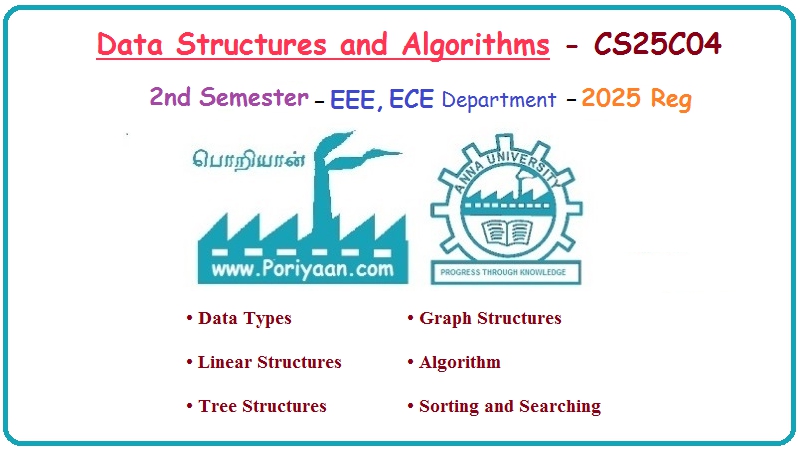
Data Structures and Algorithms
CS25C04 2nd Semester ECE, EEE Dept | 2025 Regulation

மருத்துவ குறிப்புகள் Medicine Tips
Category: மருத்துவ குறிப்புகள் Medicine Tips
தங்களை “பொறியான்” வலைத்தளம் வாயிலாக வரவேற்பதில் மிக்க மகிழ்ச்சி அடைகிறோம்.

மருத்துவ குறிப்புகள் Medicine Tips
Category: மருத்துவ குறிப்புகள் Medicine Tips
ஹோமியோபதி டாக்டர்கள் நோயாளி என்றால் ஒரு வியாதியஸ்தரின் காலையோ கையையோ சொல்ல வில்லை.

மருத்துவ குறிப்புகள் Medicine Tips
Category: மருத்துவ குறிப்புகள் Medicine Tips
ஜெர்மானிய மருத்துவர் சாமுவேல் கிருஷ்டியன் பிரடெரிக் ஹானிமன் அவர்களாவார்.

மருத்துவ குறிப்புகள் Medicine Tips
Category: மருத்துவ குறிப்புகள் Medicine Tips
ஒரு பொருளை நோயாளிக்கு கொடுப்பதற்காக, நோய் குணமாக்க மருந்தாக தயாரிக்கும் கலைக்கு பார்மஸி என்று பெயர்.

மருத்துவ குறிப்புகள் Medicine Tips
Category: மருத்துவ குறிப்புகள் Medicine Tips
வயது வந்தவர்களுக்கு :- 4 குளோபில்கள் அல்லது 2 மாத்திரைகள், அல்லது ஒரு சொட்டு தாய்க்கரைசல் அல்லது தூள் 60 மிலி கிராம்.

மருத்துவ குறிப்புகள் Medicine Tips
Category: மருத்துவ குறிப்புகள் Medicine Tips
தனிமனிதனின் தனித் தன்மைகள் முக்கியமானதாகும்.

மருத்துவ குறிப்புகள் Medicine Tips
Category: மருத்துவ குறிப்புகள் Medicine Tips
பாரா 70. உடல் நலத்தில் ஏற்படும் ஒழுங்கற்ற ஒரு மாற்றத்தை நாம் நோய் என்கிறோம்.

மருத்துவ குறிப்புகள் Medicine Tips
Category: மருத்துவ குறிப்புகள் Medicine Tips
மருத்துவத் துறைக்கு மிக முக்கியமான கொள்கையாக உலகப் பொதுமறை திருக்குறள் விதிமுறைப்படி ஒவ்வொரு மருத்துவத்துறையும் கடை பிடிக்க வேண்டியது:

மருத்துவ குறிப்புகள் Medicine Tips
Category: மருத்துவ குறிப்புகள் Medicine Tips
வேறு வகைகளில் தோன்றிய மருந்துகளாக இருந்தாலும் அவைகளின் செயல்கள் (Actions) ஒரே மாதிரியாக இருக்கும்.

மருத்துவ குறிப்புகள் Medicine Tips
Category: மருத்துவ குறிப்புகள் Medicine Tips
மருத்துவர் நோயாளியை அன்புடன் நோயாளி வரவேற்று, மனத்தில் நம்பிக்கை உண்டாக்கும்படியான எண்ணத்தை உருவாக்க வேண்டும்

மருத்துவ குறிப்புகள் Medicine Tips
Category: மருத்துவ குறிப்புகள் Medicine Tips
ஒரு வியாதியை சொஸ்தம் செய்ய ஆரம்பிக்கு முன் வெளிக்காரணங்கள் ஏதாவது இருக்கின்றனவா என்று ஆராய வேண்டும்.

மருத்துவ குறிப்புகள் Medicine Tips
Category: மருத்துவ குறிப்புகள் Medicine Tips
மெட்டீரியா மெடிகாவைப் படிப்பதினால் ஒவ்வொரு ஒளஷதத்துக்கும் இருக்கும் வலிமையை நீங்கள் தெரிந்துகொள்கிறீர்கள்.

மருத்துவ குறிப்புகள் Medicine Tips
Category: மருத்துவ குறிப்புகள் Medicine Tips
மனித சரீரத்தைத் தலை, கழுத்து, உடல், கைகள், கால்கள் என்று ஐந்து பிரிவுகளாகப் பிரிக்கலாம்.

மருத்துவ குறிப்புகள் Medicine Tips
Category: மருத்துவ குறிப்புகள் Medicine Tips
கிரேனியம் என்னும் கபாலத்தினுள்ளே நமது மூளை இருக்கிறது.

மருத்துவ குறிப்புகள் Medicine Tips
Category: மருத்துவ குறிப்புகள் Medicine Tips
இரத்தத்தின் மூலமாக சரீரத்தின் பல பாகங்களுக்கு வேண்டிய போஷிப்புப் பொருள்களும் பிராண வாயுவும் போய்ச் சேருகின்றன.

மருத்துவ குறிப்புகள் Medicine Tips
Category: மருத்துவ குறிப்புகள் Medicine Tips
சுவாச சம்பந்தமான உறுப்புக்கள்: நாம் உள்ளே இழுக்கும் மூச்சுக் காற்று மூக்கு அல்லது வாயின் வழியாக சப்தபதம், (Pharynx) என்ற பாகத்தை அடைகிறது.

மருத்துவ குறிப்புகள் Medicine Tips
Category: மருத்துவ குறிப்புகள் Medicine Tips
நமது சரீரம் பூராவையும், சருமம் அல்லது தோல் மூடிக்கொண்டு இருக்கிறது.

மருத்துவ குறிப்புகள் Medicine Tips
Category: மருத்துவ குறிப்புகள் Medicine Tips
காதுகள் சப்த அலைகளைக் கிரகித்து அவைகள் மூளைக்கு எட்டும்படியாக நரம்பு உணர்ச்சிகளாக மாற்றுகின்றன.

மருத்துவ குறிப்புகள் Medicine Tips
Category: மருத்துவ குறிப்புகள் Medicine Tips
ஆண்களின் ஜனனேந்திரியங்கள், பீஜம், ஆண்குறி, இந்திரிய நரம்பு இவைகளுடன் இன்னும் பல உபயோகங்கள் கொண்டவை.

மருத்துவ குறிப்புகள் Medicine Tips
Category: மருத்துவ குறிப்புகள் Medicine Tips
ஹோமியோபதி மருந்துகள், திரவ ரூபமாகவும் (Tinctures) பெரிய உருண்டைகளாகவும் (Pilules) சிறிய உருண்டைகளாகவும் (Globules) மாவாகவும் (Triturtions) பில்லைகளாகவும் (Pills) தயார் செய்யப்படுகின்றன.

மருத்துவ குறிப்புகள் Medicine Tips
Category: மருத்துவ குறிப்புகள் Medicine Tips
இது துரிதமாய் வேலை செய்யும் ஓர் ஒளஷதம்.

மருத்துவ குறிப்புகள் Medicine Tips
Category: மருத்துவ குறிப்புகள் Medicine Tips
வியாதியற்ற நாடி ஒரே சீராகவும், சுறுசுறுப்பாகவும், சாதாரண பலத்துடனும், மிருதுவாக உப்புவதாகவும் இருக்கும்.

மருத்துவ குறிப்புகள் Medicine Tips
Category: மருத்துவ குறிப்புகள் Medicine Tips
கீல் வாயு, கீல்வாத சுரம் முதலியவைகளின் சிறு புளிப்புத் திராவக சம்பந்தமாக (Acid) இருக்கும்.

மருத்துவ குறிப்புகள் Medicine Tips
Category: மருத்துவ குறிப்புகள் Medicine Tips
குளிப்பதனாலும், இரைப்பை கோளாறினாலும் தலைவலி.

மருத்துவ குறிப்புகள் Medicine Tips
Category: மருத்துவ குறிப்புகள் Medicine Tips
'யோக' என்பது சம்ஸ்க்ருதத்தின் 'யுஐ' என்ற வேர்ச்சொல்லிலிருந்து உருவானது.

ஆரோக்கிய குறிப்புகள் Health Tips
Category: ஆரோக்கிய குறிப்புகள் Health Tips
யோக பயிற்சிக்கு முன்பு உடலை தளர்த்துவதற்காக சூட்சம வ்வாயாம் அல்லது சிதிலீகரண வ்வாயாம் செய்ய வேண்டும்.

ஆரோக்கிய குறிப்புகள் Health Tips
Category: ஆரோக்கிய குறிப்புகள் Health Tips
சூர்ய நமஸ்காரம் பல ஆசனங்களின் தொகுப்பு ஆகும்.

ஆரோக்கிய குறிப்புகள் Health Tips
Category: ஆரோக்கிய குறிப்புகள் Health Tips
மூச்சை உள்ளிழுத்தபடி இரண்டு கைகளையும் தோளுக்கு சமமாக தூக்கி, மூச்சை வெளியில் விடவும்.

ஆரோக்கிய குறிப்புகள் Health Tips
Category: ஆரோக்கிய குறிப்புகள் Health Tips
சமதள ஸ்திதியில்: (அ) இடது காலை மடித்து. இடது குதிகாலை வலது தொடையின் ஆரம்பத்தில் பொருத்தவும்.

ஆரோக்கிய குறிப்புகள் Health Tips
Category: ஆரோக்கிய குறிப்புகள் Health Tips
சமதள ஸ்திதியில்: (அ) முதுகை தரையின் மேல் வைத்து படுத்து. கால் முட்டிகளை விறைப்பாக ஆக்கவும்.

ஆரோக்கிய குறிப்புகள் Health Tips
Category: ஆரோக்கிய குறிப்புகள் Health Tips
விலங்குகளின் ஆயுளுக்கும் அவைகளின் மூச்சு செயலுக்கும் நெருங்கிய தொடர்பு உண்டு.

ஆரோக்கிய குறிப்புகள் Health Tips
Category: ஆரோக்கிய குறிப்புகள் Health Tips
பரபரப்பான இன்றைய வாழ்க்கை முறையில் மனிதனுக்கு தூக்கம் என்பது ஒரு பிரச்சினையாக உள்ளது.

ஆரோக்கிய குறிப்புகள் Health Tips
Category: ஆரோக்கிய குறிப்புகள் Health Tips
மனித உடலில் மிக முக்கியமான பகுதி சுவாசகோஸமே (நுரையீரல்) ஆகும்.

ஆரோக்கிய குறிப்புகள் Health Tips
Category: ஆரோக்கிய குறிப்புகள் Health Tips
மனிதனின் அமைப்பு மிகவும் நுணுக்கமாகவும் எளிதில் புரிந்து கொள்ள முடியாததாகவும் இருக்கின்றது.

ஆரோக்கிய குறிப்புகள் Health Tips
Category: ஆரோக்கிய குறிப்புகள் Health Tips
மனிதன் தனக்குத்தானே சில கட்டுப்பாடுகளை வைத்துக் கொள்ள வேண்டியவனாகிறான்.

ஆரோக்கிய குறிப்புகள் Health Tips
Category: ஆரோக்கிய குறிப்புகள் Health Tips
ஒருவன் தனக்குத்தானே கேடு புரிந்துகொண்டு விடாமல் காத்துக் கொள்ளவேண்டும் என்றால் அதற்கு உடல் கட்டுப்பாடும் அவசியம்.

ஆரோக்கிய குறிப்புகள் Health Tips
Category: ஆரோக்கிய குறிப்புகள் Health Tips
உடலுக்கு ஒரு பயிற்சியாக ஆசனங்கள் யோகத்தில் உள்ளன.

ஆரோக்கிய குறிப்புகள் Health Tips
Category: ஆரோக்கிய குறிப்புகள் Health Tips
நரம்பு மண்டலம், மூளையின் பாகங்கள் அதன் ஆறுவித சக்திகள் ஆகியவற்றோடு நெருங்கிய தொடர்புள்ளது.

ஆரோக்கிய குறிப்புகள் Health Tips
Category: ஆரோக்கிய குறிப்புகள் Health Tips
மனதைச் சுத்திகரித்தல் என்றும் பிரத்தியாகார முறையை கூறலாம்.

ஆரோக்கிய குறிப்புகள் Health Tips
Category: ஆரோக்கிய குறிப்புகள் Health Tips
மந்திரம் என்பது மகா புனிதமானது. இதைச் சாதாரணமாக நினைத்து விடக்கூடாது.

ஆரோக்கிய குறிப்புகள் Health Tips
Category: ஆரோக்கிய குறிப்புகள் Health Tips
ஒருவன் பிணியினால் துள்புற்றால் கவனம் உடல் மீது இழுக்கப்பட்டு விடும். அப்போது தியானம் இல்லை.

ஆரோக்கிய குறிப்புகள் Health Tips
Category: ஆரோக்கிய குறிப்புகள் Health Tips
மேலான எண்ணங்களை வளர்த்துக்கொள்வது தியானத்திற்கு உதவி என்று பெரியவர்கள் பலர் கூறியுள்ளனர்.

ஆரோக்கிய குறிப்புகள் Health Tips
Category: ஆரோக்கிய குறிப்புகள் Health Tips
சரியான, நல்ல குருவிடம் போதுமான காலத்திற்குப் பயிற்சியை ஒழுங்காகச் செய்தால் அநேக நன்மைகளை அடையலாம்.

ஆரோக்கிய குறிப்புகள் Health Tips
Category: ஆரோக்கிய குறிப்புகள் Health Tips
மகாபாரதத்தில் சாந்தி பருவத்தில் ஒரு முழு அத்தியாயத்தில் தியானத்தைப் பற்றி வருகிறது.

சித்த மருத்துவம் Siddha medicine
Category: சித்த மருத்துவம் Siddha medicine
புரசு மரப்பட்டை சாற்றுடன் இஞ்சிச்சாறு கலந்து குடிக்க பாம்பு நஞ்சு தீரும்.

சித்த மருத்துவம் Siddha medicine
Category: சித்த மருத்துவம் Siddha medicine
அளவுக்கு அதிகமான இரைச்சலைத் தொடர்ந்து செவிமடுப்பதைத் தவிர்க்கமுடியாத நிலையில் வாழும் ஒவ்வொருவரும் நரம்பு தொடர்பான பல பிணிகளுக்கு இலக்காக நேரிடும்.

சித்த மருத்துவம் Siddha medicine
Category: சித்த மருத்துவம் Siddha medicine
மூக்குப் பொடியாகவும், சிகரெட்டாகவும், பீடி, சுருட்டு போன்ற உருவத்திலும் புகையிலையைப் பயன்படுத்தும் பழக்கம் நம்மக்களிடையே இருக்கிறது.

சித்த மருத்துவம் Siddha medicine
Category: சித்த மருத்துவம் Siddha medicine
நரம்புத் தளர்ச்சி யுகம் என்று தகுந்த காலத்தைப் பற்றிக் கூறலாம். அந்த அளவுக்கு நரம்புத்தளர்ச்சிக்கு இலக்கான மக்கள் தற்காலத்தில் அதிக அளவுக்கு உள்ளனர்.

சித்த மருத்துவம் Siddha medicine
Category: சித்த மருத்துவம் Siddha medicine
நமது உடலுக்கு தேவைப்படும் முக்கியமான திரவங்களைச் சுரப்பதற்கென நமது உடலுக்குள் சுரப்பிகள் என்ற உறுப்புகள் அமைந்துள்ளன.

சித்த மருத்துவம் Siddha medicine
Category: சித்த மருத்துவம் Siddha medicine
முழுமையான ஆரோக்கியந்தரும் உணவில் மூன்று விதமான முக்கிய சத்துக்கள் அடங்கியிருக்க வேண்டும்.

சித்த மருத்துவம் Siddha medicine
Category: சித்த மருத்துவம் Siddha medicine
நமது தேகம் வளர்ந்து நாம் உயிர் வாழ நாம் தினசரி பலவகையான உணவு வகைகளைப் புசித்து வருகிறோம்.

சித்த மருத்துவம் Siddha medicine
Category: சித்த மருத்துவம் Siddha medicine
தேள் கொட்டின இடத்தில் எலுமிச்சை பழத்தை இரண்டாக நறுக்கி வைத்து கட்டினால் விஷம் இறங்கி குணமாகும்.

சித்த மருத்துவம் Siddha medicine
Category: சித்த மருத்துவம் Siddha medicine
தினந்தோறும் அதிகாலையிலே சூரிய உதயத்திற்கு முன்பே எழுந்திருக்க வேண்டும்.

குறிப்புகள் Tips
Category: ஆன்மீக குறிப்புகள் Spiritual Notes
பெயர் விளக்கம்: விநாயகர் பெயரில் வரும் வி என்றால் இதற்கு மேல் இல்லை என்று பொருள்.

குறிப்புகள் Tips
Category: ஆன்மீக குறிப்புகள் Spiritual Notes
திருவாரூரில் இருந்து சுமார் 3 கிலோ மீட்டர் தொலைவில் தஞ்சை செல்லும் சாலையில் விளமல் என்ற ஊரில் பதஞ்சலி மனோகரர் கோயில் உள்ளது.

குறிப்புகள் Tips
Category: ஆன்மீக குறிப்புகள் Spiritual Notes
சங்கரன் + நாராயணன் = ? இப்படி ஒரு கேள்வியை ஆன்மீக ரீதியாக எழுப்பினால் அனைவரின் கவனமும் நெல்லை மாவட்டம் சங்கரன்கோவிலை நோக்கி திரும்பும்.
Category: Applied Physics I: Chapter 1: Properties of Matter - Elasticity
Elasticity is a branch of physics which deals with the elastic property of materials.
Definition and Types
Category: Applied Physics I: Chapter 1: Properties of Matter - Elasticity
A body is said to be a rigid body, if the distance between any two points in a body is unaltered due to application of force.
Category: Applied Physics I: Chapter 1: Properties of Matter - Elasticity
According to this law, "Stress is directly proportional to the strain produced, within the elastic limit".
Category: Applied Physics I: Chapter 1: Properties of Matter - Elasticity
Depending on the three types of strain, there are three types of elastic modulus. viz.
Category: Applied Physics I: Chapter 1: Properties of Matter - Elasticity
After elastic limit the body will be in a limit called plastic limit.
Category: Applied Physics I: Chapter 1: Properties of Matter - Elasticity
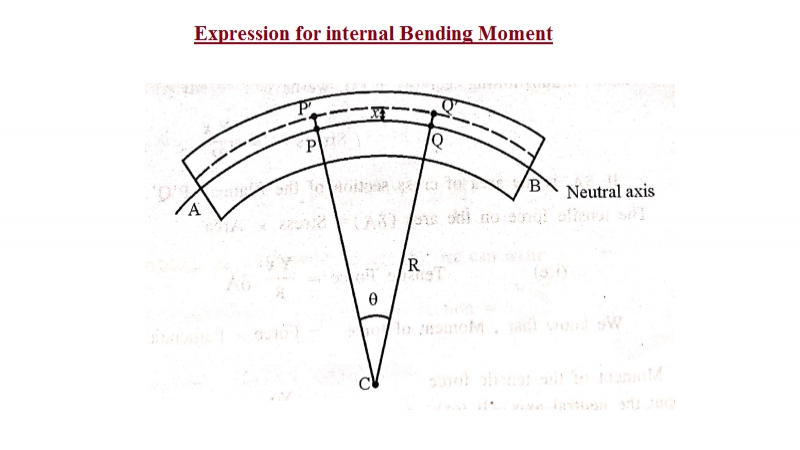
A beam is defined as a rod (or) bar, [Circular or rectangular] of uniform cross‒section whose length is very much greater than its other dimensions, such as breadth and thickness.
Category: Applied Physics I: Chapter 1: Properties of Matter - Elasticity
Let us consider a beam under the action of deforming forces. The beam bends into a circular arc as shown in Fig.

Definition and Theory
Category: Applied Physics I: Chapter 1: Properties of Matter - Elasticity
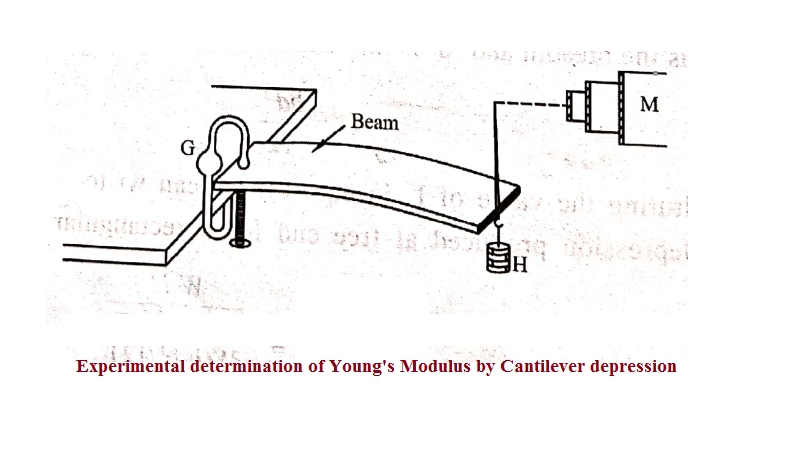
A cantilever is a beam fixed horizontally at one end and loaded at the other end.

Category: Applied Physics I: Chapter 1: Properties of Matter - Elasticity
Let us consider an element PQ of the beam of length dx, at a distance OP= x from the fixed end.
Category: Applied Physics I: Chapter 1: Properties of Matter - Elasticity
Statical Method , Graphical Method (Or) Dynamical Method : Description, Procedure
Category: Applied Physics I: Chapter 1: Properties of Matter - Elasticity
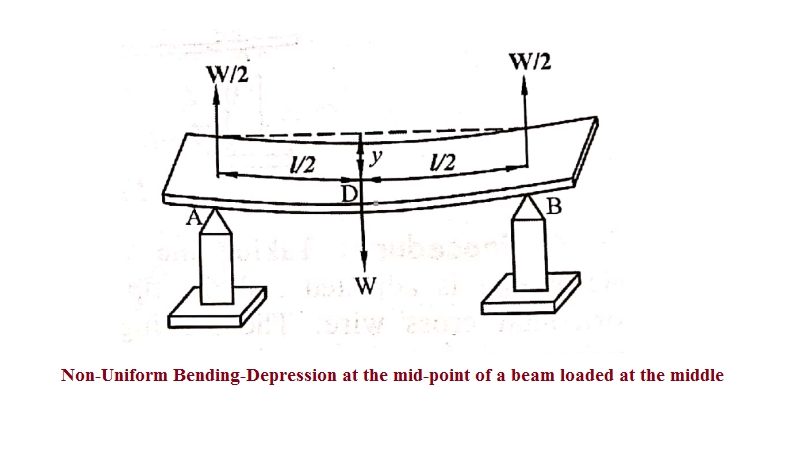
Due to the load (W) applied, at the middle of the beam the reaction W/2 is acted vertically upwards at each knife edges.
Category: Applied Physics I: Chapter 1: Properties of Matter - Elasticity
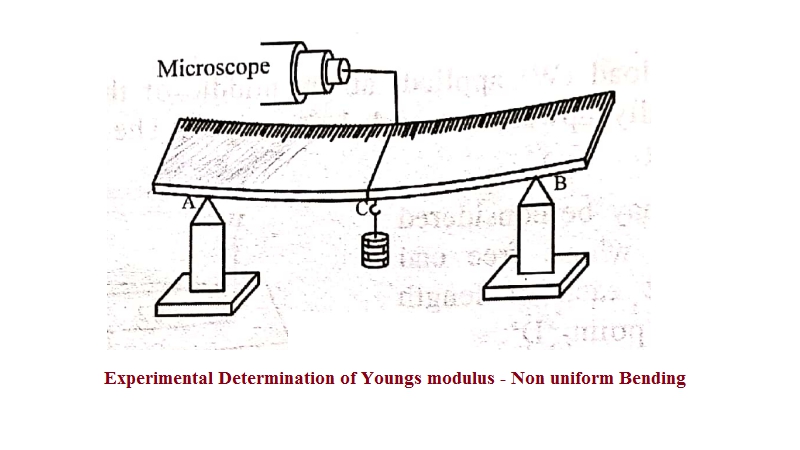
It consists of a beam, symmetrically supported on the two knife edges A and B. A weight hanger is suspended at the centre (C) of the beam my means or a loop (or) thread.
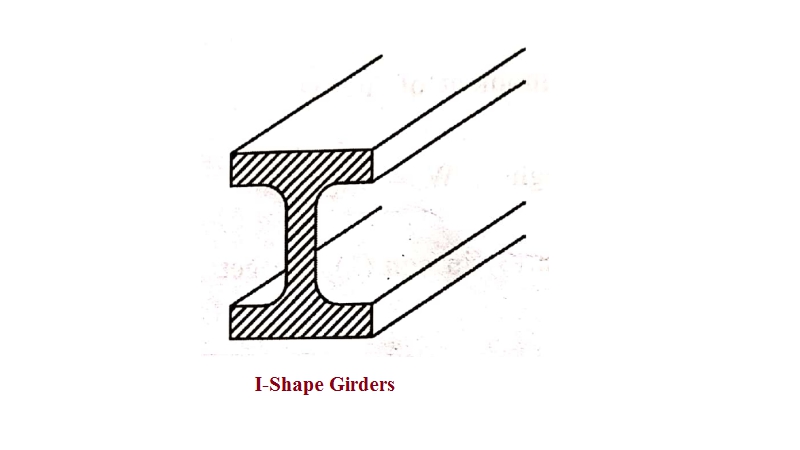
Definition, Explanation, Applications, Advantages
Category: Applied Physics I: Chapter 1: Properties of Matter - Elasticity
The girders with upper and lower section broadened and the middle section tapered, so that it can withstand heavy loads over it is called as I shape girders.
Category: Applied Physics I: Chapter 1: Properties of Matter - Elasticity
Elastic materials are utilized in the following applications viz.,
Category: Applied Physics I: Chapter 1: Properties of Matter - Elasticity
Anna University Solved Problems, Additional Solved Problems, Assignment Problems - Questions with solved Solution and Answer - Applied Physics I: Chapter 1: Properties of Matter - Elasticity
Category: Applied Physics I: Chapter 1: Properties of Matter - Elasticity
Properties of Matter - Elasticity - Important part-A 2 marks Short Questions and Answers. Applied Physics I Short Questions and Answers
Category: Applied Physics I: Chapter 1: Properties of Matter - Elasticity
Anna University Exam Part‒B Questions - Properties of Matter - Elasticity - Applied Physics I
Properties of Matter - Viscosity and Surface Tension
Category: Applied Physics I: Chapter 2: Properties of Matter - Viscosity and Surface Tension
The study of surface tension property in liquids also possess more importance in our day to day activities such as droplet formation in rain, capillary action in plants, insects walking on the water surface etc.
Definition, Explanation, Classification of viscous liquids
Category: Applied Physics I: Chapter 2: Properties of Matter - Viscosity and Surface Tension
Viscosity or internal friction of the liquid is the property of a liquid by virtue of which the liquid opposes the relative motion between its different layers.
Category: Applied Physics I: Chapter 2: Properties of Matter - Viscosity and Surface Tension
Definition: The coefficient of viscosity is defined as the tangential force per unit area required to maintain a unit velocity gradient.
Category: Applied Physics I: Chapter 2: Properties of Matter - Viscosity and Surface Tension
Chapter 2: Properties of Matter - Viscosity and Surface Tension (Applied Physics) : Differences between streamline flow and turbulent flow -
Principle, Stokes' formula, Terminal velocity
Category: Applied Physics I: Chapter 2: Properties of Matter - Viscosity and Surface Tension
When a spherical object, like steel ball moves through a high viscous liquid, when the viscous force is equal to the buoyout force it attains the terminal velocity. By finding the termial velocity, the co‒efficient of viscosity shall be determined.

Category: Applied Physics I: Chapter 2: Properties of Matter - Viscosity and Surface Tension
Stokes' law/principle is used in understanding the phenomenon of settling of particles in liquids.
Definition, Formula
Category: Applied Physics I: Chapter 2: Properties of Matter - Viscosity and Surface Tension
Surface tension is defined as the force per unit length acting along the surface of a liquid.
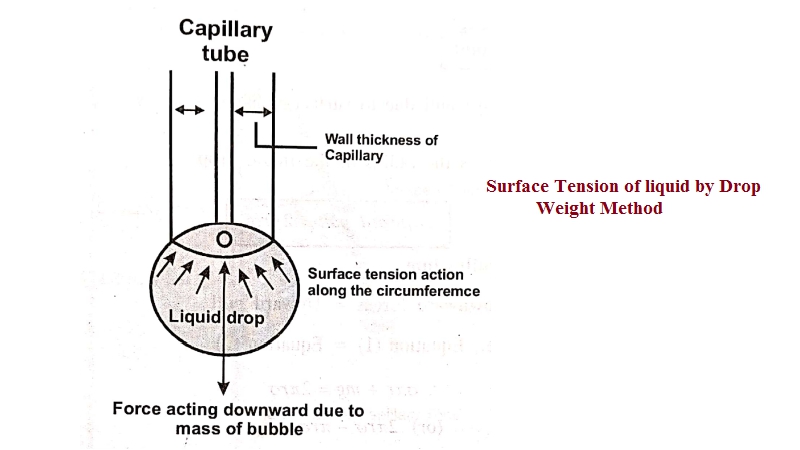
Theory, Principle, Description, Equation
Category: Applied Physics I: Chapter 2: Properties of Matter - Viscosity and Surface Tension
This method is based on the principle that the weight of a drop falling slowly out of a capillary held vertically is directly proportional to its surface tension. The drop falls when its weight just exceeds surface tension.
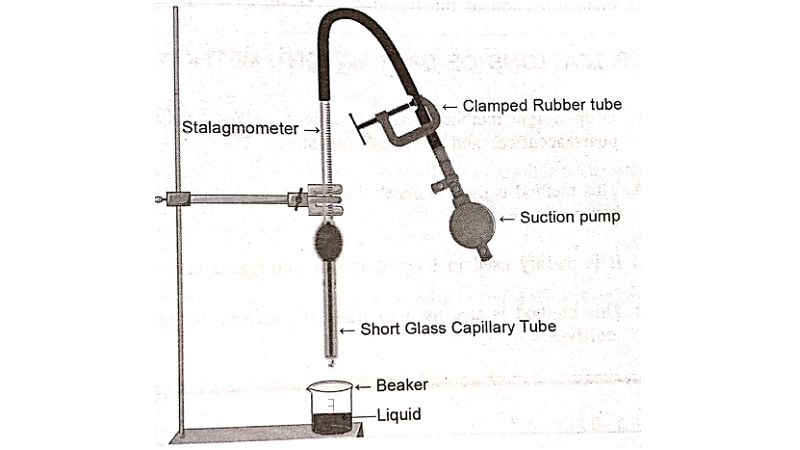
Category: Applied Physics I: Chapter 2: Properties of Matter - Viscosity and Surface Tension
The liquid for which the surface tension is to be determined is filled in the stalogmometer by suction using suction pump.
Category: Applied Physics I: Chapter 2: Properties of Matter - Viscosity and Surface Tension
Applications of drop weight method
Category: Applied Physics I: Chapter 2: Properties of Matter - Viscosity and Surface Tension
Anna University Solved Problems, Additional Solved Problems, Assignment Problems - Questions with solved Solution and Answer
Category: Applied Physics I: Chapter 2: Properties of Matter - Viscosity and Surface Tension
Properties of Matter - Viscosity and Surface Tension (Applied Physics I) - Important part-A 2 marks Short Questions and Answers
Category: Applied Physics I: Chapter 2: Properties of Matter - Viscosity and Surface Tension
Anna University Exam Part‒B Questions - Applied Physics I: Chapter 2: Properties of Matter - Viscosity and Surface Tension
Definition, Example
Category: Applied Physics I: Chapter 3: Properties of Matter - Thermal Physics
Normally there are three modes by which transfer of heat take from one place to another viz., conduction, convection and radiation.
Definition, Formula
Category: Applied Physics I: Chapter 3: Properties of Matter - Thermal Physics
The conducting property vary from material to material, so it is essential to know about the conducting property of a material.
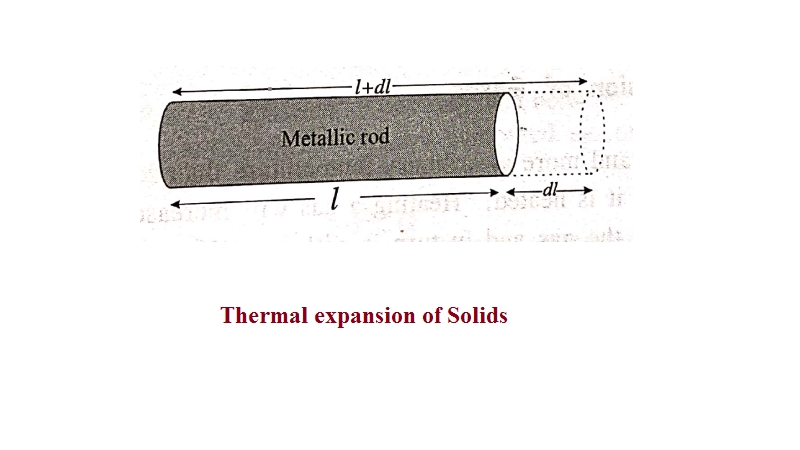
Category: Applied Physics I: Chapter 3: Properties of Matter - Thermal Physics
Thermal expansion: The expansion of a metal, when subjected to heat is called thermal expansion.

Definition, Description, Equation
Category: Applied Physics I: Chapter 3: Properties of Matter - Thermal Physics
Temperature changes cause the body to expand (or) contract. If temperature changes are permitted to occur freely, no load (or) stress will be induced in the structure.
Definition, Fabrication, Applications - Thermal Physics
Category: Applied Physics I: Chapter 3: Properties of Matter - Thermal Physics
As the name itself implies that Bimetallic strips are made up of two thin metal strips with different co‒efficient of thermal expansion.
Thermal Physics
Category: Applied Physics I: Chapter 3: Properties of Matter - Thermal Physics
Expansion joints are provided while laying the railway lines.
Category: Applied Physics I: Chapter 3: Properties of Matter - Thermal Physics
(i) Buildings (ii) Walls (iii) Floors (iv) Foundations
Category: Applied Physics I: Chapter 3: Properties of Matter - Thermal Physics
Anna University Solved Problems, Additional Solved Problems, Assignment Problems - Questions with solved Solution and Answer
Category: Applied Physics I: Chapter 3: Properties of Matter - Thermal Physics
Important part-A 2 marks Short Questions and Answers - Applied Physics I: Chapter 3: Properties of Matter - Thermal Physics
Category: Applied Physics I: Chapter 3: Properties of Matter - Thermal Physics
Anna University Exam Part‒B Questions - Applied Physics I: Chapter 3: Properties of Matter - Thermal Physics
Category: Applied Physics I: Chapter 4: Oscillations and Waves
Motion and Types of Motion
Category: Applied Physics I: Chapter 4: Oscillations and Waves
1. Displacement 2. Amplitude 3. Time Period 4. Frequency 5. Phase
Definition, Types
Category: Applied Physics I: Chapter 4: Oscillations and Waves
Simple Harmonic motion is the motion in which the acceleration of a body is directly proportional to the displacement from a fixed point and is always directed towards the fixed point (or) equilibrium position.
Category: Applied Physics I: Chapter 4: Oscillations and Waves
The differential equation for a simple harmonic motion shall be obtained from the expressions of displacement and velocity, as follows.
Category: Applied Physics I: Chapter 4: Oscillations and Waves
Definitionm, Explanation, Formula - Moment, Couple and Torque.

Category: Applied Physics I: Chapter 4: Oscillations and Waves
Let us consider a cylindrical wire of length ‘L’ and radius 'r'. The wire is fixed at its upper end and twisted through an angle ‘θ’ by applying a torque at the lower end.

Principle, Description, Working
Category: Applied Physics I: Chapter 4: Oscillations and Waves
When a disc (torsion pendulum) is rotated in a horizontal plane, the disc executes simple harmonic oscillation due to the restoring couple produced in the wire.
Category: Applied Physics I: Chapter 4: Oscillations and Waves
Determination of the moment of inertia of the disc and rigidity modulus of the wire using torsion pendulum with mass.
Definition, Examples
Category: Applied Physics I: Chapter 4: Oscillations and Waves
There are three type of oscillation/vibration, based on the force that is acting on the system, viz.
Definition, Examples, Types
Category: Applied Physics I: Chapter 4: Oscillations and Waves
Wave motion is one of the most important method of transferring energy. Rather than sound energy, various forms of energies such as light, heat, X‒ray etc are transmitted by wave motion.
Category: Applied Physics I: Chapter 4: Oscillations and Waves
Applied Physics I: Chapter 4: Oscillations and Waves
Category: Applied Physics I: Chapter 4: Oscillations and Waves
When a strecthed string between two points in plucked in a direction perpendicular to its length, then transverse vibrations are set up in the string.
Category: Applied Physics I: Chapter 4: Oscillations and Waves
Let us consider a string of length 'l' fixed between two points AB.
Category: Applied Physics I: Chapter 4: Oscillations and Waves
When the string is plucked, progressive waves are generated in the string and it travels to both ends.
Category: Applied Physics I: Chapter 4: Oscillations and Waves
Travelling (or) Progressive waves and standing (or) stationary waves
Category: Applied Physics I: Chapter 4: Oscillations and Waves
Differences between Travelling waves and Standing waves

Definition, Explanation, Cases, Conclusions
Category: Applied Physics I: Chapter 4: Oscillations and Waves
When two waves executing simple harmonic motion travel in opposite directions in a straight line, with same amplitude, same frequency and same time period, then the resultant wave obtained is called a standing wave (or) stationary wave pattern.
Category: Applied Physics I: Chapter 4: Oscillations and Waves
In general the standing wave can be represented by a sine curve and it reduces to a straight line twice in each time period.
Category: Applied Physics I: Chapter 4: Oscillations and Waves
In general, there is no transmission of energy across any plane in either direction of a stationary wave, because, if two progressive waves of equal energy travel in opposite direction, then the resultant flow of energy will be equal to zero.
Category: Applied Physics I: Chapter 4: Oscillations and Waves
Anna University Solved Problems, Additional Solved Problems, Assignment Problems - Questions with solved Solution and Answer - Applied Physics I: Chapter 4: Oscillations and Waves
Category: Applied Physics I: Chapter 4: Oscillations and Waves
Important part-A 2 marks Short Questions and Answers - Applied Physics I: Chapter 4: Oscillations and Waves
Category: Applied Physics I: Chapter 4: Oscillations and Waves
Anna University Exam Part‒B Questions - Applied Physics I: Chapter 4: Oscillations and Waves
Category: Applied Physics I: Chapter 5: Oscillations and Waves - Ultrasonics
Each and every creature in this world produces sound. For example, the rustling of leaves in trees, movement of insects, breath from human beings etc. produces sound due to vibration of particles in air.

Category: Applied Physics I: Chapter 5: Oscillations and Waves - Ultrasonics
Sound waves are mechanical vibrations of smaller amplitude. Sound waves are classified into three categories based on their frequencies.
Category: Applied Physics I: Chapter 5: Oscillations and Waves - Ultrasonics
The sound wave having frequency less than 20 Hz are called as infrasonics or infra sound.
Category: Applied Physics I: Chapter 5: Oscillations and Waves - Ultrasonics
The sound wave having frequency between 20 Hz to 20,000 Hz are called as audible frequency sound.
Category: Applied Physics I: Chapter 5: Oscillations and Waves - Ultrasonics
The sound wave having frequency more than 20000 Hz are called as ultrasonics or ultra sound.
Category: Applied Physics I: Chapter 5: Oscillations and Waves - Ultrasonics
In general there are three methods of producing the ultrasonic waves.viz.,
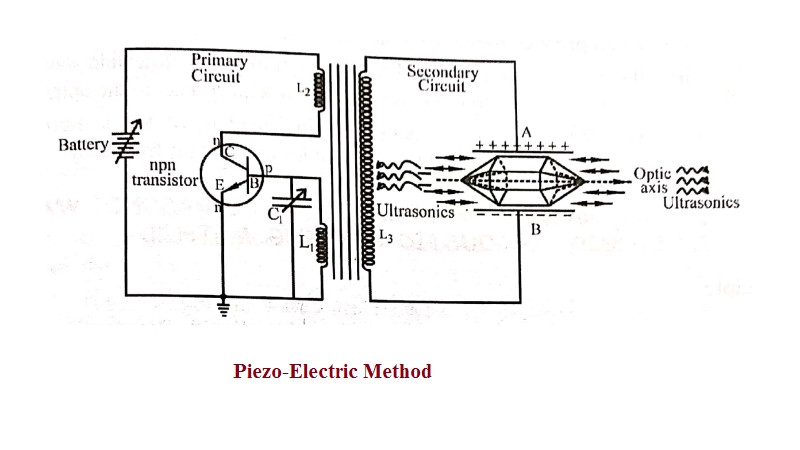
Principle, Construction, Working, Condition, Limitations - Production of Ultrasonics
Category: Applied Physics I: Chapter 5: Oscillations and Waves - Ultrasonics
The crystals which produces piezo‒electric effect and converse piezo‒electric effect are termed as piezo‒electric crystals.

Principle, Construction, Working
Category: Applied Physics I: Chapter 5: Oscillations and Waves - Ultrasonics
When ultrasonic waves are passed through a liquid, the density of the liquid varies layer by layer due to the variation in pressure and hence the liquid will act as a diffraction grating, so called acoustical grating.
Category: Applied Physics I: Chapter 5: Oscillations and Waves - Ultrasonics
Applications of Ultrasonics
Category: Applied Physics I: Chapter 5: Oscillations and Waves - Ultrasonics
Anna University Solved Problems, Additional Solved Problems, Assignment Problems - Questions with solved Solution and Answer - Applied Physics I: Chapter 5: Oscillations and Waves - Ultrasonics
Category: Applied Physics I: Chapter 5: Oscillations and Waves - Ultrasonics
Important part-A 2 marks Short Questions and Answers - Applied Physics I: Chapter 5: Oscillations and Waves - Ultrasonics
Category: Applied Physics I: Chapter 5: Oscillations and Waves - Ultrasonics
Anna University Exam Part‒B Questions - Applied Physics I: Chapter 5: Oscillations and Waves - Ultrasonics
Category: Applied Physics I: Chapter 6: Oscillations and Waves - Electromagnetic Waves
Electromagnetic waves are constituted by periodic variation of electric and magnetic fields. Though these two fields are seperate, yet, they are closely related to each other.
Category: Applied Physics I: Chapter 6: Oscillations and Waves - Electromagnetic Waves
Let us discuss some of the basic definitions which govern the electric field viz.
Category: Applied Physics I: Chapter 6: Oscillations and Waves - Electromagnetic Waves
(i) Gauss law for electricity, (ii) Gauss law for magnetism, (iii) Faraday's law of electromagnetic induction and (iv) Ampere's law.
Category: Applied Physics I: Chapter 6: Oscillations and Waves - Electromagnetic Waves
(i) Maxwell's first equation from electric Gauss law (ii) Maxwell's second equation from magnetic Gauss law (iii) Maxwell's third equation from Faraday's law
Category: Applied Physics I: Chapter 6: Oscillations and Waves - Electromagnetic Waves
The summary of Maxwell's equations in differential & integral form, based on Guass Law (in both electric and magnetic fields), Faraday's law and Ampere's law is appended in the table below.
Category: Applied Physics I: Chapter 6: Oscillations and Waves - Electromagnetic Waves
Maxwell's equations in free space (or) vacuum
Category: Applied Physics I: Chapter 6: Oscillations and Waves - Electromagnetic Waves
If a charged particle is moving, then it can produce magnetic field which exerts a force on nearby moving charges.
Category: Applied Physics I: Chapter 6: Oscillations and Waves - Electromagnetic Waves
There are many localized sources through which the electromagnetic waves can be generated. Some of the localized sources and the types of electromagnetic waves generated is given in table below.
Category: Applied Physics I: Chapter 6: Oscillations and Waves - Electromagnetic Waves
If the field vector of electromagnetic wave is constant over any plane that is perpendicular to the directon of wave propagation at any instant of time, then this wave is called plane electromagnetic wave.
Category: Applied Physics I: Chapter 6: Oscillations and Waves - Electromagnetic Waves
The Five Properties of electromagnetic waves are as follows

Category: Applied Physics I: Chapter 6: Oscillations and Waves - Electromagnetic Waves
Every region of the electromagnetic spectrum has numerous applications in our regular life.
Category: Applied Physics I: Chapter 6: Oscillations and Waves - Electromagnetic Waves
Anna University Solved Problems, Additional Solved Problems, Assignment Problems - Questions with solved Solution and Answer - Applied Physics I: Chapter 6: Oscillations and Waves - Electromagnetic Waves
Category: Applied Physics I: Chapter 6: Oscillations and Waves - Electromagnetic Waves
Applied Physics I: Chapter 6: Oscillations and Waves - Electromagnetic Waves : Important part-A 2 marks Short Questions and Answers
Category: Applied Physics I: Chapter 6: Oscillations and Waves - Electromagnetic Waves
Anna University Exam Part-B Questions - Applied Physics I: Chapter 6: Oscillations and Waves - Electromagnetic Waves
Category: Applied Physics I: Chapter 7: Quantum Mechanics
In this chapter we are going to discuss in detail about the quantum theory of black body radiation, photo‒electric effect, Compton effect and the theory and applications of Schroedinger equations.
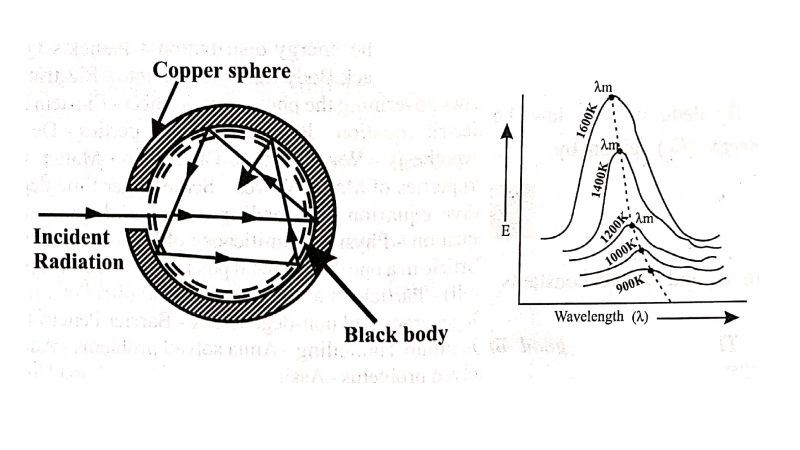
Kirchoff's Law, Experiment, Energy Spectrum
Category: Applied Physics I: Chapter 7: Quantum Mechanics
A perfect black body is the one which absorbs and emits all the radiations, (corresponding to all wavelengths) that fall on it. The radiation, given out by a perfect black body is called black body radiation.
Category: Applied Physics I: Chapter 7: Quantum Mechanics
1. Stefan‒Boltzmann's law 2. Wien's Displacement law 3. Rayleigh‒Jean's law - Different laws were proposed for explaining the energy distribution with respect to the wavelength.
Category: Applied Physics I: Chapter 7: Quantum Mechanics
Planck derived an expression for the energy distribution, with the following assumptions.
Category: Applied Physics I: Chapter 7: Quantum Mechanics
In metals, there are large number of free electrons. These free electrons can more freely to a highest energy level, so called Fermi energy level.
Category: Applied Physics I: Chapter 7: Quantum Mechanics
The experimental observations on photoelectric effect may be summarized as follows, which are known as the fundamental laws of photoelectric emission.
Category: Applied Physics I: Chapter 7: Quantum Mechanics
Einstein proposed a quantum theory on the basis that, "when a photon collides with an electron in a metal, it transfers the energy to the electron in an "all (or) none" process".
Category: Applied Physics I: Chapter 7: Quantum Mechanics
According to the Quantum theory of radiation, we know that the exchange of energy values between the light radiation and particles have discrete energy values.
Category: Applied Physics I: Chapter 7: Quantum Mechanics
The universe is made of Radiation (light) and matter (particles).
Category: Applied Physics I: Chapter 7: Quantum Mechanics
Quantum Mechanics : Properties of Matter Waves
Quantum Mechanics
Category: Applied Physics I: Chapter 7: Quantum Mechanics
Schroedinger describes the wave nature of a particle in mathematical form and is known as Schroedinger wave equation.
Category: Applied Physics I: Chapter 7: Quantum Mechanics
It is convenient to use the time independent wave equation rather than using time dependent wave equation, because of the following reason.
Category: Applied Physics I: Chapter 7: Quantum Mechanics
Wave function: It is the variable quantity that is associated with a moving particle at any position (x, y, z) and at any time 't' and it relates the probability of finding the particle at that point and at that time.
Category: Applied Physics I: Chapter 7: Quantum Mechanics
Since the walls are of infinite potential, the particle does not penetrate out from the box.
Category: Applied Physics I: Chapter 7: Quantum Mechanics
The solution of one‒dimensional potential box can be extended for a three dimensional potential box. In a three dimensional potential box, the particle (electron) can move in any direction in space.
Quantum Mechanics
Category: Applied Physics I: Chapter 7: Quantum Mechanics
Quantum Mechanics: Degeneracy and non-degeneracy
Category: Applied Physics I: Chapter 7: Quantum Mechanics
If a particle with energy 'E' is incident on a thin energy barrier of height 'V', greater than ‘E', then there is a finite probability of the particle to penetrate the barrier. This phenomenon is called barrier penetration and this effect is called Tunnelling Effect (or) Quantum Tunnelling.
Category: Applied Physics I: Chapter 7: Quantum Mechanics
Anna University Solved Problems, Additional Solved Problems, Assignment Problems - Questions with solved Solution and Answer - Applied Physics I: Chapter 7: Quantum Mechanics
Category: Applied Physics I: Chapter 7: Quantum Mechanics
Applied Physics I: Chapter 7: Quantum Mechanics : Important part-A 2 marks Short Questions and Answers
Category: Applied Physics I: Chapter 7: Quantum Mechanics
Anna University Exam Part-B Questions - Applied Physics I: Chapter 7: Quantum Mechanics
Category: Applied Physics I: Chapter 8: Applied Optics - Interference
In this chapter we are going to discuss about interferometry and its applications.
Category: Applied Physics I: Chapter 8: Applied Optics - Interference
The interference is based on the super position principle, which states that, "when two (or) more light wave trains act simultaneously on any particle in a medium, the particle is displaced due to the superposition of all the wave trains".
Category: Applied Physics I: Chapter 8: Applied Optics - Interference
For interference to occur between two sources, the following conditions has to be satisfied.
Category: Applied Physics I: Chapter 8: Applied Optics - Interference
When this thin air film is illuminated by the monochromatic source of light, interference occurs between the rays reflected from upper and lower surface of the film.
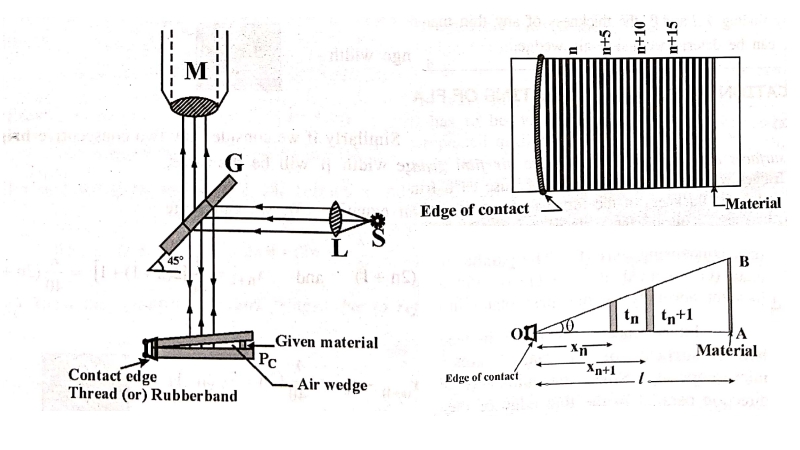
Principle, Description, Working
Category: Applied Physics I: Chapter 8: Applied Optics - Interference
Using the principle of airwedge, we can find the thickness of any thin materials, like paper, wire, hair etc.
Principle, Theory, Explanation
Category: Applied Physics I: Chapter 8: Applied Optics - Interference
If two surfaces are perfectly flat, then the air film gradually varies in thickness.
Category: Applied Physics I: Chapter 8: Applied Optics - Interference
The phenomenon of interference has been used to test the flatness of surfaces and also used to reduce the reflecting power of the lens and prisms.
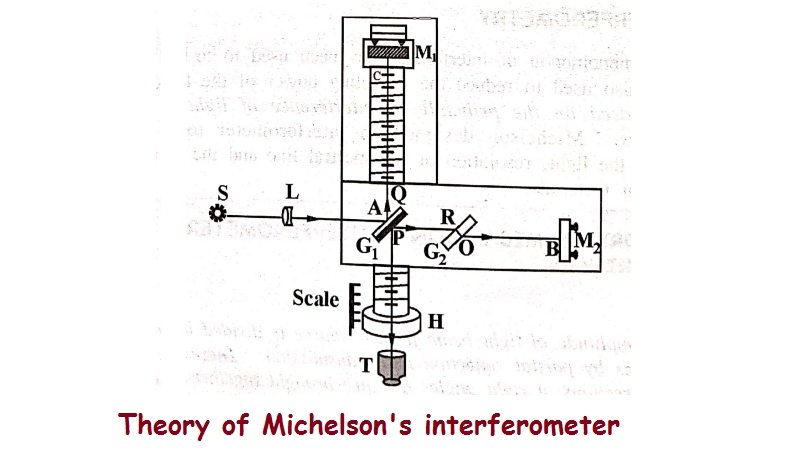
Principle, Construction, Working, Adjustments
Category: Applied Physics I: Chapter 8: Applied Optics - Interference
THEORY OF MICHELSON'S INTERFEROMETER: Principle, Construction, Working, Adjustments. TYPES OF FRINGES: (i) Circular fringes (ii) Localised fringes iii) Localised white light fringes
Category: Applied Physics I: Chapter 8: Applied Optics - Interference
Michelson interferometer can be used to determine
Category: Applied Physics I: Chapter 8: Applied Optics - Interference
Anna University Solved Problems, Additional Solved Problems, Assignment Problems - Questions with solved Solution and Answer - Applied Physics I: Chapter 8: Applied Optics - Interference
Category: Applied Physics I: Chapter 8: Applied Optics - Interference
Applied Physics I: Chapter 8: Applied Optics - Interference : Important part-A 2 marks Short Questions and Answers
Category: Applied Physics I: Chapter 8: Applied Optics - Interference
Anna University Exam Part-B Questions - Applied Physics I: Chapter 8: Applied Optics - Interference.
Category: Applied Physics I: Chapter 9: Applied Optics - Fiber Optics
Soon after the discovery of LASERS some experiments were carried out on propagation of information through light waves in open atmosphere.

Category: Applied Physics I: Chapter 9: Applied Optics - Fiber Optics
Optical fiber is made up of transparent dielectrics, (glass or plastics).
Category: Applied Physics I: Chapter 9: Applied Optics - Fiber Optics
Advantages of Optical fiber
Category: Applied Physics I: Chapter 9: Applied Optics - Fiber Optics
The principle of optical fiber communication is Total Internal Reflection (TIR).

Category: Applied Physics I: Chapter 9: Applied Optics - Fiber Optics
An optical fibre communication System (Block diagram) consists of three important parts viz., (i) Transmitter (ii) Optical fibre (iii) Receiver.
Category: Applied Physics I: Chapter 9: Applied Optics - Fiber Optics
Optical sensor is a transducer which converts any form of signal into optical signal in the measurable form.

Principle, Description, Working | Fibre optic sensors
Category: Applied Physics I: Chapter 9: Applied Optics - Fiber Optics
It is based on the principle of Interference between the beams emerging out from the reference fibre and the fibre kept in the measuring environment.

Principle, Description, Working | Fibre optic sensors
Category: Applied Physics I: Chapter 9: Applied Optics - Fiber Optics
Light is sent through a transmitting fibre and is made to fall on a moving target.
Category: Applied Physics I: Chapter 9: Applied Optics - Fiber Optics
Engineering Applications: 1. Telecommunication 2. Computer Networks 3. Cable Television 4. Delay lines 5. Optical fibres
Category: Applied Physics I: Chapter 9: Applied Optics - Fiber Optics
All the below features keep the optical fibre communication superior over conventional radio‒wave communication.
Category: Applied Physics I: Chapter 9: Applied Optics - Fiber Optics
Anna University Solved Problems, Additional Solved Problems, Assignment Problems - Questions with solved Solution and Answer - Applied Physics I: Chapter 9: Applied Optics - Fiber Optics
Category: Applied Physics I: Chapter 9: Applied Optics - Fiber Optics
Applied Physics I: Chapter 9: Applied Optics - Fiber Optics - Important part-A 2 marks Short Questions and Answers
Category: Applied Physics I: Chapter 9: Applied Optics - Fiber Optics
Anna University Exam Part-B Questions - Applied Physics I: Chapter 9: Applied Optics - Fiber Optics
Category: Applied Physics I: Chapter 10: Applied Optics - Lasers
Light waves can also be amplified and is termed as 'LASER' which is an acronym for "Light Amplification by Stimulated Emission of Radiation".
Category: Applied Physics I: Chapter 10: Applied Optics - Lasers
Since an ordinary light spreads in all directions, the intensity reaching the target is very less.
Category: Applied Physics I: Chapter 10: Applied Optics - Lasers
Differences between Ordinary light and Laser beam
Lasers | Optics
Category: Applied Physics I: Chapter 10: Applied Optics - Lasers
(i) Absorption (ii) Spontaneous emission and (iii) Stimulated emission.
Category: Applied Physics I: Chapter 10: Applied Optics - Lasers
Differences between stimulated and spontaneous emission of radiation
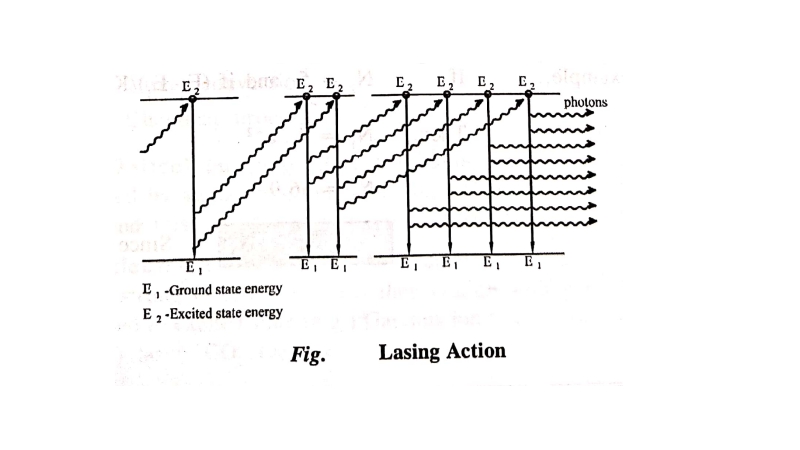
Category: Applied Physics I: Chapter 10: Applied Optics - Lasers
Due to stimulated emission, the photons multiply in each step giving rise to an intense beam of photons that are coherent and moving in the same direction.
Lasers | Optics
Category: Applied Physics I: Chapter 10: Applied Optics - Lasers
The chance for emission (or) the absorption depends only on the number of atoms in the ground state and in the excited state.
Lasers | Optics
Category: Applied Physics I: Chapter 10: Applied Optics - Lasers
Some of the most commonly used methods are: (a) Optical pumping. (b) Electrical Pumping (Direct electron excitation). (c) Inelastic atom‒atom collision. (d) Direct conversion. (e) Chemical process
Category: Applied Physics I: Chapter 10: Applied Optics - Lasers
The Resonant Cavity (or) optical resonator constitutes an active medium kept inbetween a 100% reflecting mirror and a partially reflecting mirror .
Category: Applied Physics I: Chapter 10: Applied Optics - Lasers
The flow chart for the laser action is as shown in Fig.
Category: Applied Physics I: Chapter 10: Applied Optics - Lasers
Lasers are classified into five major categories based on the type of active medium.

2025 regulation - 2nd semester for All Department including EEE, ECE Department, etc. Subject Code: CS25C04, Subject Name: Data Structures and Algorithms, Batch: 2025, 2026, 2027, 2028. Institute: Anna University Affiliated Engineering College, TamilNadu. This page has Data Structures and Algorithms (CS25C04) study material, notes, semester question paper pdf download, important questions, lecture notes.
PDF Download Links
Data Structures and Algorithms
PDF Download Links
Data Structures and Algorithms
PDF Download Links
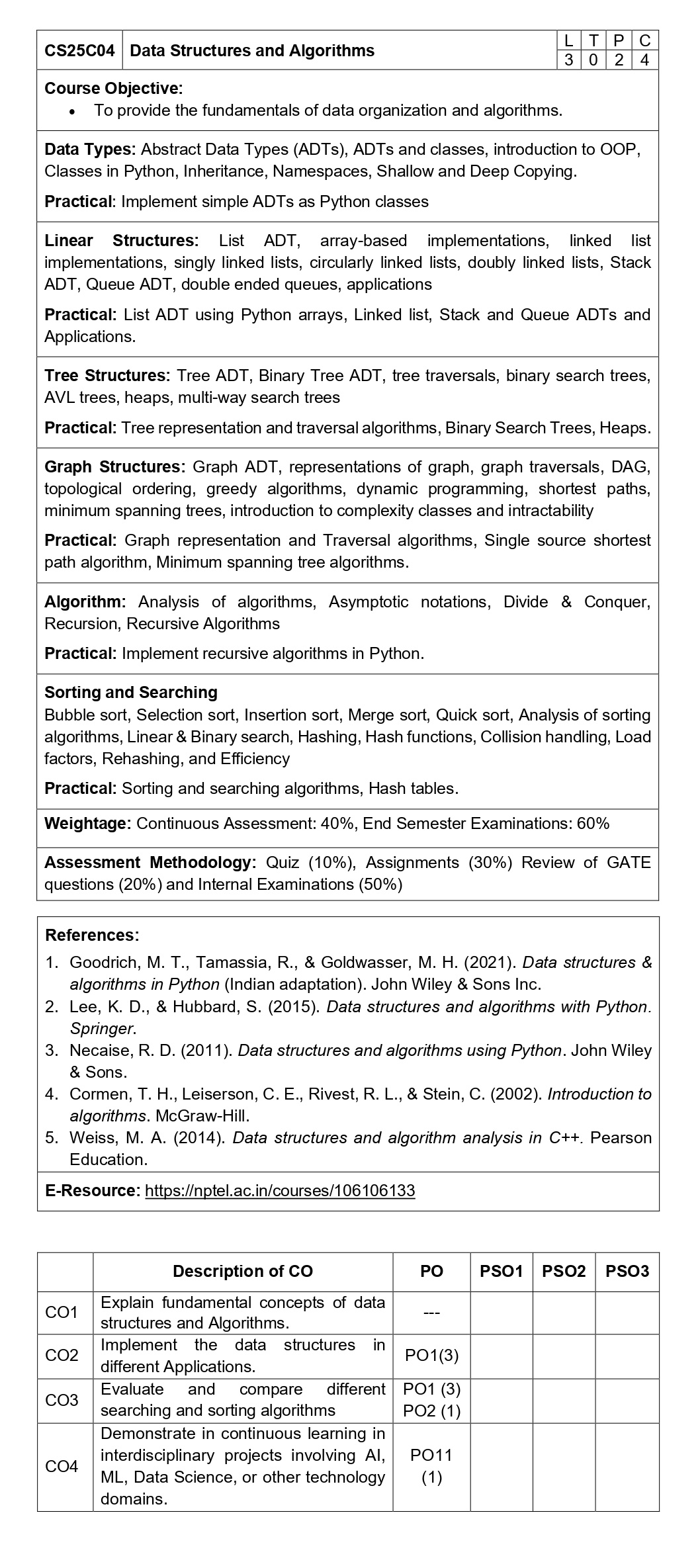
CS25C04
Data
Structures and Algorithms
Course Objective:
•
To provide the fundamentals of data organization and algorithms.
Data
Types: Abstract Data Types (ADTs), ADTs and classes,
introduction to OOP, Classes in Python, Inheritance, Namespaces, Shallow and
Deep Copying.
Practical:
Implement simple ADTs as Python classes
Linear
Structures: List ADT, array-based implementations,
linked list implementations, singly linked lists, circularly linked lists,
doubly linked lists, Stack ADT, Queue ADT, double ended queues, applications
Practical:
List ADT using Python arrays, Linked list, Stack and Queue ADTs and
Applications.
Tree
Structures: Tree ADT, Binary Tree ADT, tree
traversals, binary search trees, AVL trees, heaps, multi-way search trees
Practical:
Tree representation and traversal algorithms, Binary Search Trees, Heaps.
Graph
Structures: Graph ADT, representations of graph,
graph traversals, DAG, topological ordering, greedy algorithms, dynamic
programming, shortest paths, minimum spanning trees, introduction to complexity
classes and intractability
Practical:
Graph representation and Traversal algorithms, Single source shortest path
algorithm, Minimum spanning tree algorithms.
Algorithm:
Analysis of algorithms, Asymptotic notations, Divide & Conquer, Recursion,
Recursive Algorithms
Practical:
Implement recursive algorithms in Python.
Sorting
and Searching
Bubble
sort, Selection sort, Insertion sort, Merge sort, Quick sort, Analysis of
sorting algorithms, Linear & Binary search, Hashing, Hash functions,
Collision handling, Load factors, Rehashing, and Efficiency
Practical:
Sorting and searching algorithms, Hash tables.
Weightage:
Continuous Assessment: 40%, End Semester Examinations: 60%
Assessment Methodology:
Quiz (10%), Assignments (30%) Review of GATE questions (20%) and Internal
Examinations (50%)
References:
1.
Goodrich, M. T., Tamassia, R., & Goldwasser, M. H. (2021). Data structures
& algorithms in Python (Indian adaptation). John Wiley & Sons Inc.
2.
Lee, K. D., & Hubbard, S. (2015). Data structures and algorithms with
Python. Springer.
3.
Necaise, R. D. (2011). Data structures and algorithms using Python. John Wiley
& Sons.
4.
Cormen, T. H., Leiserson, C. E., Rivest, R. L., & Stein, C. (2002).
Introduction to algorithms. McGraw-Hill.
5.
Weiss, M. A. (2014). Data structures and algorithm analysis in C++. Pearson Education.
E-Resource:
https://nptel.ac.in/courses/106106133
: CS25C04 2nd Semester ECE, EEE Dept | 2025 Regulation Data Structures and Algorithms