English Essentials II: Unit IV: Team Work
Group Discussion
A GD is a methodology used by an organization to gauge whether the candidate has certain personality traits and/or skills that it desires in its members.
GROUP DISCUSSION
Listen to
the short video on a group discussion using the link
(https://m.youtube.com/watch?v=_
IXjbph22Fk).
Observe
how the opinions are presented. What will be your opinion on the topic,
"What is better? Honest and poor or Dishonest and Rich?" Have a
discussion with your class. Give your opinion first and ask for others' opinion
after that.
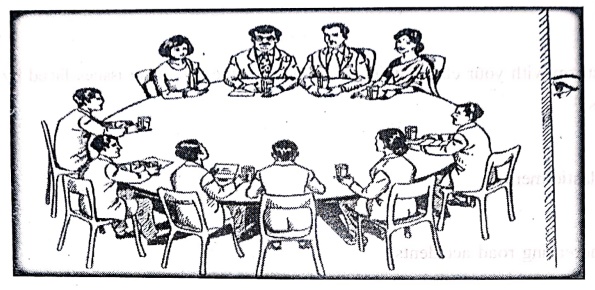
What is a Group Discussion?
A
GD is a methodology used by an organization to gauge whether the candidate has
certain personality traits and/or skills that it desires in its members. In
this methodology, the group of candidates is given a topic or a situation,
given a few minutes to think about the same, and then asked to discuss it among
themselves for 15-20 minutes. Some of the personality traits the GD is trying
to gauge may include :-
•
Ability to work in a team
•
Communication skills
•
Reasoning ability
•
Leadership skills
•
Initiative
•
Assertiveness
•
Flexibility
•
Creativity
•
Problem solving skills
GD as part of Selection Process
Company's
Perspective
Companies
conduct group discussion after the written test so as to check on the
candidates' interactive skills and how good he/she is at communicating with
other people. The GD is to check how one behaves, participates and contributes
in a group, how much importance do the candidates give to the group objective
as well as their own, how well do one listen to the viewpoints of others and
how open-minded is one in accepting views contrary to one's own. The aspects
which make up a GD are verbal communication, non-verbal behavior, conformation
to norms, decision-making ability and cooperation. You should try to be as true
as possible to these aspects.
Types of GD
GDs
can be topic-based or case-based.
Topic based GDs can be
classified into three types
1. Factual Topics
2. Controversial Topics
3. Abstract Topics
i. Factual Topics
Factual
topics are about practical things, which an ordinary person is aware of in his
day- to-day life. Typically these are about socio-economic topics. These can be
current i.e. they may have been in the news lately, or could be unbound by
time. A factual topic for discussion gives a candidate a chance to prove that
he is aware of and sensitive to his environment.
E.g.
The
Education Policy of India
Tourism
in India
State
of the Senior Citizens.
ii. Controversial Topics
Controversial
topics are the ones that are argumentative in nature. They are meant to
generate controversy. In GDs where these topics are given for discussion, the
noise level is usually high, there may be tempers flying. The idea behind
giving a topic like this is to see how much maturity the candidate is
displaying by keeping his temper in check, by rationally and logically arguing
his point of view without getting personal and emotional.
E.g.
Reservations
should be Removed
Women
Make Better Managers.
iii. Abstract Topics
Abstract
topics are about intangible things. These topics are not given often for
discussion, but their possibility cannot be ruled out. These topics test your
lateral thinking and creativity.
E.g.
A is an Alphabet
Twinkle
Twinkle Little Star Little Star
The
Number 10
Case-based GD
•
Another variation is the use of a case instead of a topic.
•
The case study tries to simulate a real-life situation. Information about the
situation will be given to you and you would be asked as a group to resolve the
situation. In the case study, there are no incorrect answers or perfect
solutions. The objective in the case study is to orget you to think about the
situation from various angles.
•
Management institutes have case-based discussion rather than topic-based discussion
in their selection procedures.
Reasons for having a GD
•
It helps you to understand a subject more deeply.
•
It improves your ability to think critically.
•
It helps in solving a particular problem.
•
It helps the group to make a particular decision.
•
It gives you the chance to hear other persons' ideas.
•
It improves your listening skills.
•
It increases your confidence in speaking.
•
It can change your attitudes.
Discussion Etiquette
Do
✔ Speak pleasantly and
politely to the group.
✔ Respect the
contribution of every speaker,
✔ Remember that a
discussion is not an argument. Learn to disagree politely.
✔ Think about your
contribution before you speak. How best can you answer the question/ contribute
to the topic?
✔ Try to stick to the
discussion topic. Don't introduce irrelevant information.
✔ Be aware of your body
language when you are speaking.
✔ Agree with and
acknowledge what you find interesting.
Don't
X Lose your
temper. A discussion is not an argument.
X Shout. Use a
moderate tone and medium pitch.
X Use too many
gestures when you speak. Gestures like finger pointing and table thumping can
appear aggressive.
X Dominate the
discussion. Confident speakers should allow quieter students a chance to
contribute.
X Draw too much on
personal experience or anecdote. Although some tutors encourage students
missiodo is to reflect on their own experience, remember not to generalise too
much.
X Interrupt. Wait
for a speaker to finish what they are saying before you speak.
Leading a Discussion
You
may be in a seminar group that requires you to lead a group discussion, or lead
a discussion after an oral presentation. You can demonstrate leadership by:
•
introducing yourself and the members of the group
•
stating the purpose of the discussion
•
inviting quiet group members to speak
•
being objective
•
summarizing the discussion
How to Face a GD
Success
in a group Discussion needs
1.
Communication Skills
2.
Knowledge and ideas regarding a given subject
3.
Capability to co-ordinate and lead
4.
Exchange of thoughts
5.
Addressing the group as a whole
6.
Thorough preparation
Points to Remember
•
Knowledge is strength. A candidate with good reading habits has more chances of
success. In other words, sound knowledge on different topics like politics,
finance, economy, science and technology is helpful.
•
Power to convince effectively is another quality that makes you stand out among
others.
•
Clarity in speech and expression is yet another essential quality.
•
If you are not sure about the topic of discussion, it is better not to
initiate. Lack of knowledge or wrong approach creates a bad impression.
Instead, you might adopt the wait and watch attitude. Listen attentively to
others, you may be able to come up with a point or two later.
•
A GD is a formal occasion where slang should be avoided.
•
A GD is not a debating stage. Participants should confine themselves to
expressing their viewpoints. In the second part of the discussion, candidates
can exercise their choice in agreeing, disagreeing or remaining neutral.
•
Use simple, direct and straightforward language.
•
Don't interrupt a speaker when the session is on. Try to score by increasing
your size, not by cutting others short.
•
Maintain rapport with fellow participants. Eye contact plays a major role. Non-
verbal gestures, such as listening intently or nodding while appreciating
someone's viewpoint speak of you positively.
•
Communicate with each and every candidate present. While speaking don't keep looking
at a single member. Address the entire group in such a way mat everyone feels
you are speaking to him or her. Don't look at the examiner while the discussion
is in progress.
The Right Approach
1.
Be as natural as possible. Do not try and be someone you are not. Be yourself.
2.
A group discussion is your chance to be more vocal. The evaluator wants to hear
you speak.
3.
Take time to organize your thoughts. Think of what you are going to say.
4.
Seek clarification if you have any doubts regarding the subject.
5.
Don't start speaking until you have clearly understood and analyzed the
subject.
6.
Work out various strategies to help you make an entry: initiate the discussion
or agree with someone else's point and then move onto express your views.
7.
Opening the discussion is not the only way of gaining attention and
recognition. If you do not give valuable insights during the discussion, all
your efforts of initiating the discussion will be in vain.
8.
Your body language says a lot about you - your gestures and mannerisms are more
likely to reflect your attitude than what you say.
9.
Language skills are important only to the effect as to how you get your points
across clearly and fluently.
10.
Be assertive not dominating; try to maintain a balanced tone in your discussion
and analysis.
11.
Don't lose your temper if anyone says anything you object to. The key is to
stay objective: Don't take the discussion personally.
12.
Always be polite: Try to avoid using extreme phrases like:' I strongly object'
or 'I disagree'. Instead try phrases like: 'I would like to share on...' or
'One difference between your point and mine..." or "I beg to differ
with you"
13.
Brush up on your leadership skills: motivate the other members of the team to
speak (“Raghu, let us hear your views" - Essentially be subtle), and
listen to others' views. Be receptive to others' opinions and do not be
abrasive or aggressive.
14.
Apart from the above points, the panel will also judge team members for their
alertness and presence of mind, problem-solving abilities, ability to work as a
team without alienating certain members, and creativity.
15.
If you have a group of like-minded friends, you can have a mock group
discussion where you can learn from each other through giving and receiving feedback.
Mistakes to be Avoided
Here's
a list of the most common mistakes made at group discussions:
Emotional outburst
•
Deviate from the subject
•
Treat the discussion as a forum to air one's own views.
•
Lose objectivity and make personal attacks.
Quality Vs Quantity
•
Assessment based is not only on your communication skills but also on your
ability to be a team placer.
•
Evaluation is based on quality, and not on quantity. Your contribution must be
relevant.
•
The mantra is "Contributing meaningfully to the team's success."
Domination is frowned upon.
Egotism Showing off
•
Exercise restraint in anything. You will end up being frowned upon if you
attempt showing- off your knowledge.
•
Facts and figures need not validate all your statements.
•
Its your analysis and interpretation that are equally important - not just
facts and figures. You might be appreciated for your in-depth knowledge. But
you will fail miserably in your people skills.
Get noticed - But for the right reasons
•
False starts are extremely expensive. They cost you your job. It is very
important to listen and understand the topic before you air your opinions.
•
Spending a little time analyzing the topic may provide you with insights which
others may not have thought about. Use a pen and paper to jot down your ideas.
•
Listen! It gives you the time to conceptualize and present the information in a
better manner.
•
Some mistakes are irrepairable. Starting off the group discussion with a
mistake is one such mistake.
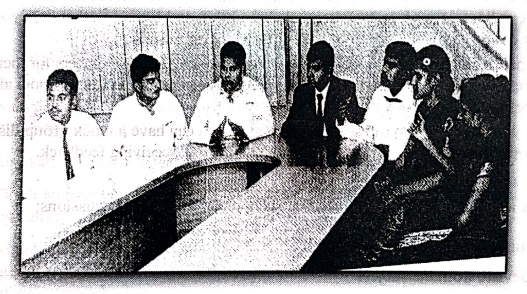
Some Useful Expressions
There
are some standard expressions used by people when they participate in group
discussions. Given below are sets of expressions useful for effective
communication.
1. Expressing opinions
I
think/feel that...
In
my opinion/view...
From
my point of view...
2. Agreement
I(quite)
agree with...
I
couldn't agree more...
I
second that...
I
think you're absolutely right...
As
you say...
That's
a very good point.
You've
got a very good point there.
3. Doubt &
Reservation
Well...
may be... possible
I'm
not so sure about that.
You
may be right.
I
don't think I'd say that.
Yes,
but don't you think...
I
can see your point, but...
I
think that's debatable.
I'd
like to reserve judgement on that...
4. Disagreement
I
wouldn't say that...
That
is a very sweeping statement.
On
the contrary,
Not
at all.
That's
not how I see it.
I
don't agree (at all).
I
can't accept that.
I'm
sorry. I think you're absolutely wrong
6. Refuting &
Dismissing
With
respect.
Actually...
As
a matter of fact...
That's
not the point.
That
has nothing to do with it.
It
simply isn't true that...
It's
(patiently) obvious that...
Are
you suggesting...?
The
facts just don't support that argument
Any
one can see...
7. Persuading &
convincing
Look,
Surely...
Why
not...
Why
don't you?
Everyone
knows that...
Wouldn't
it be better to...
You
must admit..
You
will agree...
Don't
forget...
Let's
not forget...
It's
in your interest (to)... you know.
Let's
face it.
8. Exemplifying &
Emphasizing
For
example/for instance...
Take
the case of...
And
as evidence/proof of that...
Remember...
What's
more...
This
supports my argument that...
It
follows from that, therefore...
9. Relating
In
other words...
That
is to say....
To
put it in another way...
What
I'm suggesting is...
Look
at it this way….
At
all events...
In
any case...
Anyway...
Or
you could say...
I
mean...
By
which I mean...
TASK
I. Listed below are 20
ways of behaving in a group discussion. Write down whether you think each
attitude is positive or negative.
A participant,
1.
has previously thought about the topic.
2.
is willing to listen to others.
3.
never takes anything seriously.
4.
is willing to change his opinion.
5.
makes long speeches.
6.
is not afraid to say what he believes.
7.
will not give others a chance to speak.
8.
will talk to the tutor and not to other members of the group.
9.
encourages other members of the group to speak.
10.
makes sarcastic remarks,
11.
is tolerant of others' beliefs.
12.
makes his points concisely (briefly).
13.
becomes angry or upset easily.
14.
supports good ideas from other group members.
15.
interrupts rudely.
16.
pretends to agree with the rest of the group, although he really does not.
17.
can relieve a tense or emotional situation with joke.
18.
shows that his own comments and ideas relate to points that previous speakers
have made.
19.
holds whispered conversations with his neighbour.
20.
thinks that time spent on discussion is time wasted.
II. Read the passage, "Communicating
across culture" and based on the information given discuss with your class
on the "Importance of Learning Foreign Languages apart from English"
The
emergence of the global economy has made the knowledge of foreign languages a
critical need for today's professionals. Teaching, interpretation, research,
tourism may remain areas where foreign language skills are an absolute must,
but there are other careers in politics, diplomacy, commerce, business,
agriculture, science and research in which a thorough knowledge of foreign
languages is also crucial for success. The 21st century demands multilingual
personnel in most aredio of nail of goility ef fields of human enterprise and
will continue to grow in the coming years.
French
French
is the second lingua franca in the world after English. It is a common language
to communicate, with 133 million Francophones, 77 million first speakers and 51
million second speakers.
French
is also the most commonly taught second language in the world after English. It
is spoken in Africa, Europe, the Americas, some of the Pacific islands. In Europe,
it is spoken in France and Monaco as an official language. It is also a
co-official language in Belgium, Luxemburg and Switzerland. In the Americas,
French is spoken in the French part of Canada (Quebec), in some Caribbean
islands, in the French Guiana. It also plays an important role in Louisiana and
New England in the States. To many, French represents culture, 'finesse', the
art of living, delicious French cuisine, fashion defiles, Cannes Festival, etc.
It is also one of the official languages of many International Organisations
worldwide, like the Amnesty International, the European Union, the Olympic
Games Committee, NAFTA, NATO, OECD, the Red Cross, WHO, WTO,
Spanish
Spanish
is gaining more and more importance; especially in Europe; It has already been
established as a second language; spanish is an official language of many
international organisations as well. In Europe, the three most predominant
languages of official organisations are English, French and German. Outside of
Europe, however, they are English, French and Spanish.
German
German
is equally important because it supports a giant industry and a commercial
world where everything needs to be dealt in that language. While it can be
considered as one of the dominant languages of Europe, outside of Europe, it
has a very small influence. German, however, is still a language many
non-Europeans choose to learn, especially the career-driven ones.
Chinese
China
has the advantage of its massive population. With nearly 1.5 billion people, it
is expected to flood the markets, European and US alike. Chinese already plays
an important, if not domineering role, in SE Asia while in Vancouver, Canada,
it is the first spoken language. Knowledge of Chinese will be an important
asset in the years to come.
Japanese
No
one fails to recognise the importance of Japan in today's world economy.
Japanese language has three scripts: Hiragana, Katakana and Kanji, and it is
the second, which comprises all technical words.
What
language you choose to learn is up to you. It could be that you require an
extra qualification at work. If German is the obvious answer to a car
manufacturing job post, French could be what you need for a job in fashion
magazines (Elle, Marie Claire, etc.) and Italian for a career in classical music.
III. Some Common GD
Topics
•
Is China a threat to the Indian software industry?
•
Should water resources be nationalized?
•
What is the effect of movies on youth good or bad?
•
Are studies more beneficial in India or in Abroad?
•
Advantages of Co-education.
•
How to deal with international terrorism?
•
Should we pursue our policy of dialogue with Pakistan?
•
Present state of Indian Cricket team
•
Is Globalization Really Necessary?
•
Is dependence on computers a good thing?
•
Should there be private universities?
•
Advertising is a waste of resources.
•
Joint family is a blessing in disguise
•
Higher Education should be made possible only for those who can pay for it.
•
Women cannot successfully combine both career and home
•
Women are good managers.
•
Religion And Politics Should Not Mix
•
Brain-Drain Has To Be Stopped
•
Beauty Contests Degrade womanhood
•
How to Deal with High Oil Prices
•
Environment Management.
•
Love marriage/Arranged marriage.
English Essentials II: Unit IV: Team Work : Tag: English : - Group Discussion
English Essentials II: Unit IV: Team Work
Under Subject
English Essentials II
EN25C02 2nd Semester | 2025 Regulation | 2nd Semester 2025 Regulation
Related Subjects
English Essentials II
EN25C02 2nd Semester | 2025 Regulation | 2nd Semester 2025 Regulation
Tamils and Technology தமிழர்களும் தொழில்நுட்பமும்
UC25H02 2nd Semester | 2025 Regulation | 2nd Semester 2025 Regulation
Linear Algebra
MA25C02 2nd Semester | 2025 Regulation
Transforms and its Applications
MA25C03 2nd Semester EEE Dept | 2025 Regulation | 2nd Semester 2025 Regulation

Applied Physics (CE) II
PH25C02 2nd Semester Civil, Agri Depts | 2025 Regulation | 2nd Semester 2025 Regulation
Applied Physics (CSIE) II
PH25C03 2nd Semester AIDS, CSE, IT, CSE(CY) Dept | 2025 Regulation | 2nd Semester 2025 Regulation
Applied Physics (EE) II
PH25C04 2nd Semester EEE Dept | 2025 Regulation | 2nd Semester 2025 Regulation

Applied Physics (ME) II
PH25C05 2nd Semester Mechanical Dept | 2025 Regulation | 2nd Semester 2025 Regulation
Applied Chemistry (CE) II
CY25C02 2nd Semester Civil Dept | 2025 Regulation | 2nd Semester 2025 Regulation

Applied Chemistry (ME) II
CY25C03 2nd Semester Mechanical Dept | 2025 Regulation | 2nd Semester 2025 Regulation

Electron Devices
EC25C01 2nd Semester ECE Dept | 2025 Regulation | 2nd Semester 2025 Regulation
Digital Principles and Computer Organization
CS25C06 2nd Semester AIDS, CSE, IT, CSE(CY) Dept | 2025 Regulation | 2nd Semester 2025 Regulation

Basic Electrical and Electronics Engineering
EE25C01 2nd Semester | 2025 Regulation | 2nd Semester 2025 Regulation

Basic Civil and Mechanical Engineering
GE25C01 2nd Semester EEE Dept | 2025 Regulation | 2nd Semester 2025 Regulation
Data Structures using CPlusPlus
CS25C05 2nd Semester ECE Dept | 2025 Regulation | 2nd Semester 2025 Regulation
Engineering Drawing
ME25C01 EEE, Mech, Agri, EEE Depts | 2025 Regulation | 2nd Semester 2025 Regulation
Data Structures and Algorithms
CS25C04 2nd Semester EEE Dept | 2025 Regulation

Circuits and Network Analysis
EC25C02 2nd Semester ECE Dept | 2025 Regulation | 2nd Semester 2025 Regulation

Engineering Mechanics
ME25C02 2nd Semester Mech, Civil, Agri Depts | 2025 Regulation | 2nd Semester 2025 Regulation
Object Oriented Programming (OOPs)
CS25C07 2nd Semester CSE, CSE(CY) Depts | 2025 Regulation | 2nd Semester 2025 Regulation