Tamils and Technology: Unit I: Weaving and Pottery Ceramic Technology
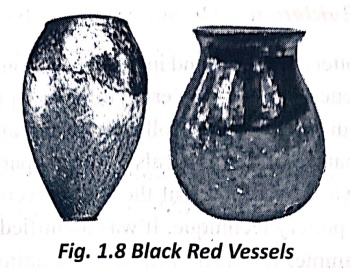
Black Red Vessels
Tamils and Technology
1. The Raw Material of Black-Red Pottery 2. Nanotechnology in Black Red Pottery 3. Colouring 4. Uses of Red, Black Pottery
BLACK RED VESSELS
Pottery
Pottery
is a kind of objects made of clay by humans for their needs. Pottery generally
refers to objects made of clay.
Black and Red Ware (BRW)
Since
both black and red colours appears on the same surface, they are called
black-red vessels.
Though,
both the colours appear on the same surface, in most the vessels red colour
appears on the outer surface and black colour appears on the inner surface.
The
Black and Red Ware culture (BRW) is a culture that emerged in North India and
Central India during the late Bronze Age and Early Iron Age around 1450BC -
1200 BC.
Black
Red Pottery flourished in the Western Gangetic Plains (Western UP) between 1450
BC 1200 BC. Originally, the grey colour painted pottery culture flourished in
the parts of India like eastern Uttar Pradesh. Later, in North India, the black
glazed pottery culture emerged in the 16 Mahajanpada of the Haryankoa dynasty,
between 700BC and 500BC.
Archaeological
artefacts from the Indus Valley Civilization in the Punjab and Gujarat regions
of India are known from the post Arab period. They are the black and red
pottery culture areas.
1. The Raw Material of Black-Red Pottery
Spectroscopic
analysis of some samples of black and red-ware found at Kizhadi were
experimented. The results of that study revealed that the red colour of the
black-red pottery was due to hamatite,
an iron mineral and the black colour was due to the use of organic matter, charcoal.
The
ancient potters living at Kizhadi used a unique technique of heating these dark
red coloured pots at a temperature of 1100 °C.
2. Nanotechnology in Black Red Pottery
An
examination of the pot shell found at Kizhadi excavations reveals the techniques
used during the Sangam period really excite us. One of them is the use of
elements of nanotechnology in the heating process of the pot.
The
world renowned journal "The Nature Scientific Report' published this
article.
Carbon Nanotubes
Chemical
analysis of the interior pot shells found at Kizhadi confirmed the presence of
nanotubes in the black paint. The researchers proved that the carbon nanotubes
were responsible for the black coating on the inner side of the pot shell that
did not decay or did not lose luster.
The
tensile strength of carbon nanotubes is 100 times higher than that of the same
size steel. This tenacity is the reason why the black paint on the pottery does
not disintegrate even after 2000 years.
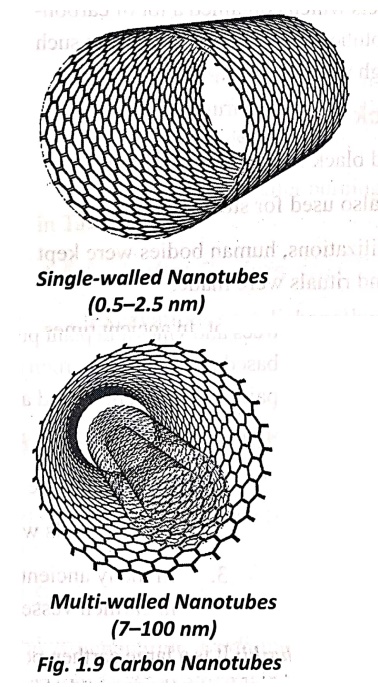
Carbon
nanotubes have been discovered in the archaeological excavations. Nano
particles and carbon nanotubes have been found in the materials from the
excavations in the Mediterranean region and in Damascus steel. These nanotubes
date back to 8 or 9th century AD. The carbon nonotubes found at Kizhadi are
more than 2400 years old.
Single-walled and Multi-walled Nanotubes
Both
single-walled nanotubes and multi-walled nanotubes were found in the pottery
excavated at Kizhadi. Now, carbon nanotubes are formed by heating a
carbon-based compound to a very high temperature i.e. 1200°C. So Sangam people
could have made this possible by heating at very high temperatures.
3. Colouring
Sangam
Tamils used to paint different colours while heating the pots. They knew the
temperature at which the pots should be heated so that the colours painted in
such a manner did not disintegrate or fade.
During
that time, dyes would have been prepared from plants, trees and vines and plant
products which contained a lot of carbon- based compounds. Carbon nanotubes
must have formed when such painted pots were heated at high temperatures.
4. Uses of Red, Black Pottery
1.
Sangam people used black red pots for cooking.
2.
Large vessels were also used for storing grains.
3.
In many ancient civilizations, human bodies were kept in earthen vessels and
rituals were made.
4.
Elders' Thazhi: It is a large
earthen pot. In ancient times, the method of keeping the dead body and the
ornaments used by them inside the large pot and bury in the soil.
Tamils and Technology: Unit I: Weaving and Pottery Ceramic Technology : Tag: Tamil : Tamils and Technology - Black Red Vessels
Tamils and Technology: Unit I: Weaving and Pottery Ceramic Technology
Under Subject
Tamils and Technology தமிழர்களும் தொழில்நுட்பமும்
UC25H02 2nd Semester | 2025 Regulation | 2nd Semester 2025 Regulation
Related Subjects
English Essentials II
EN25C02 2nd Semester | 2025 Regulation | 2nd Semester 2025 Regulation
Tamils and Technology தமிழர்களும் தொழில்நுட்பமும்
UC25H02 2nd Semester | 2025 Regulation | 2nd Semester 2025 Regulation
Linear Algebra
MA25C02 2nd Semester | 2025 Regulation
Transforms and its Applications
MA25C03 2nd Semester EEE Dept | 2025 Regulation | 2nd Semester 2025 Regulation

Applied Physics (CE) II
PH25C02 2nd Semester Civil, Agri Depts | 2025 Regulation | 2nd Semester 2025 Regulation
Applied Physics (CSIE) II
PH25C03 2nd Semester AIDS, CSE, IT, CSE(CY) Dept | 2025 Regulation | 2nd Semester 2025 Regulation
Applied Physics (EE) II
PH25C04 2nd Semester EEE Dept | 2025 Regulation | 2nd Semester 2025 Regulation

Applied Physics (ME) II
PH25C05 2nd Semester Mechanical Dept | 2025 Regulation | 2nd Semester 2025 Regulation
Applied Chemistry (CE) II
CY25C02 2nd Semester Civil Dept | 2025 Regulation | 2nd Semester 2025 Regulation

Applied Chemistry (ME) II
CY25C03 2nd Semester Mechanical Dept | 2025 Regulation | 2nd Semester 2025 Regulation

Electron Devices
EC25C01 2nd Semester ECE Dept | 2025 Regulation | 2nd Semester 2025 Regulation
Digital Principles and Computer Organization
CS25C06 2nd Semester AIDS, CSE, IT, CSE(CY) Dept | 2025 Regulation | 2nd Semester 2025 Regulation

Basic Electrical and Electronics Engineering
EE25C01 2nd Semester | 2025 Regulation | 2nd Semester 2025 Regulation

Basic Civil and Mechanical Engineering
GE25C01 2nd Semester EEE Dept | 2025 Regulation | 2nd Semester 2025 Regulation
Data Structures using CPlusPlus
CS25C05 2nd Semester ECE Dept | 2025 Regulation | 2nd Semester 2025 Regulation
Engineering Drawing
ME25C01 EEE, Mech, Agri, EEE Depts | 2025 Regulation | 2nd Semester 2025 Regulation
Data Structures and Algorithms
CS25C04 2nd Semester EEE Dept | 2025 Regulation

Circuits and Network Analysis
EC25C02 2nd Semester ECE Dept | 2025 Regulation | 2nd Semester 2025 Regulation

Engineering Mechanics
ME25C02 2nd Semester Mech, Civil, Agri Depts | 2025 Regulation | 2nd Semester 2025 Regulation
Object Oriented Programming (OOPs)
CS25C07 2nd Semester CSE, CSE(CY) Depts | 2025 Regulation | 2nd Semester 2025 Regulation