Python for Data Science: Chapter 4: Descriptive Analytics
Facets of Data
Descriptive Analytics
Questions: 1. What does "Facets of Data" mean? Explain any three forms of data. 2.What is the importance of considering facets of data.
Chapter:4
Descriptive
Analytics
Facets of
Data
•
The word facet means side or aspect of something. Hence the term Facets of Data means ‒ different sides
or forms in which data can exist or be represented. For instance ‒ Data can be
represented in tabular form, text, multimedia, real‒time and so on.
•
Following are different forms in which
data appears ‒
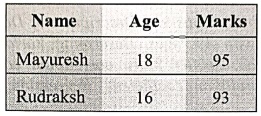
1. Structured data:
Data is well organized in rows and columns ‒ like Excel sheet or database
table. Every column has fixed data type like name, age, marks etc.
2. Unstructured data:
Data is without any fixed format. There is no predefined structure for data. It
is in free‒form.
For
example ‒ Social Media Post, Chat messages or emails.
3. Natural language data:
Data is written in human language such as English, Hindi and so on. But machine
find it hard to interpret directly. For example ‒ "This product is
good" is a review text. Or "Google Play music" is a voice
command. This data is considered as a natural language data. Natural Language
processing is a part of AI that helps computers understand human language.
4. Machine generated data:
Data is automatically created by devices, sensors or systems. It is not
generated by humans. For example ‒ Temperature sensors data in weather station,
smartwatch heart rate logs.
5. Graph based data:
This is a kind of data in which data is represented as nodes(entities) and
edges(relationships). It shows how the things are connected. For instance ‒
Facebook showing friends and their connections. Google maps showing cities and
routes.
6. Audio, video, image data:
This is a multimedia data. It is the data that contains sound, visuals or both.
This data is complex and rich in information. For instance ‒ Photos on
Instagram or YouTube Videos.
Streaming data: This
data is the data that comes continuously in real‒time, rather than being stored
first. For instance Stock market price updates, social media live comments.
Importance of considering facets of data
1. Right data storage method: Each
type of data needs a different storage system. For example ‒ Structured data
can be stored in relational databases unstructured data can be stored in NoSQL
databases like MongoDB, Cassandra.
2. Analysis technique :
Different data forms require different analysis methods. For instance to
analyse tweets we can't use Excel we need text mining or NLP tools.
a. Structured data uses
statistical methods.
b. Unstructured text
uses Natural Language Processing.
c. Images / Audio and
videos use computer vision.
d. Streaming data
uses Real‒time analytics.
3. Data preprocessing:
Understanding the facet helps to clean and prepare data correctly.
a. Structured data
remove missing values, standardize columns.
b. Unstructured data
extract keywords or features.
c. Audio and video
data is converted to numerical features before analysis.
4. Selection of tools and techniques:
Knowledge of facets help in selecting suitable tools and technologies.
a.
If structured data is there then
SQL, Excel, R or Python language is selected for processing.
b.
If Unstructured data is there then
Hadoop, Spark or NoSQL technologies are preferred.
c.
If there is Image or Video data is
present OpenCV, TensorFlow is used.
5. Efficient data integration:
In real‒world applications, data rarely comes from one source. We often combine
structured, unstructured and streaming data. For example ‒ An E‒commerce
company uses structured data(product database), unstructured data(customer
reviews) or streaming(real‒time website clicks).
6. Decision making: Different
data forms give different kinds of insights. For instance ‒ Structured data
tells us what are the contents, unstructured data tells why did it happen, and
streaming tells use what is happening right now.
7. Data governance and security:
Each type of data has different privacy, storage and access methods. For
example ‒ Text or Emails may need encryption. Knowing the facet helps design
correct security policies.
Review Questions
1. What does
"Facets of Data" mean? Explain any three forms of data.
2.What is the
importance of considering facets of data.
Python for Data Science: Chapter 4: Descriptive Analytics : Tag: Computer Programming, Python, Data Science : Descriptive Analytics - Facets of Data
Python for Data Science: Chapter 4: Descriptive Analytics
Under Subject
Python for Data Science
AD25201 2nd Semester AIDS Dept | 2025 Regulation | 2nd Semester 2025 Regulation
Related Subjects

English Essentials II
EN25C02 2nd Semester | 2025 Regulation | 2nd Semester 2025 Regulation

Tamils and Technology தமிழர்களும் தொழில்நுட்பமும்
UC25H02 2nd Semester | 2025 Regulation | 2nd Semester 2025 Regulation
Linear Algebra
MA25C02 2nd Semester | 2025 Regulation

Applied Physics (CSIE) II
PH25C03 2nd Semester AIDS, CSE, IT, CSE(CY) Dept | 2025 Regulation | 2nd Semester 2025 Regulation
Digital Principles and Computer Organization
CS25C06 2nd Semester AIDS, CSE, IT, CSE(CY) Dept | 2025 Regulation | 2nd Semester 2025 Regulation

Basic Electrical and Electronics Engineering
EE25C01 2nd Semester | 2025 Regulation | 2nd Semester 2025 Regulation
Python for Data Science
AD25201 2nd Semester AIDS Dept | 2025 Regulation | 2nd Semester 2025 Regulation

Re-Engineering for Innovation
ME25C05 2nd Semester | 2025 Regulation | 2nd Semester 2025 Regulation
Python for Data Science - Laboratory
AD25201 2nd Semester AIDS Dept | 2025 Regulation | 2nd Semester 2025 Regulation