Data Structures using C PlusPlus: Chapter 5: Linked Lists
Linked List based Implementation of Stacks
C++ Programing
Questions: 1. Using linked list, formulate separate routines to create an empty stack and to push an element onto a stack. 2. Write a C++ program to implement stack through linked list. 3. Write a program to implement STACK through linked list.
Linked
List based Implementation of Stacks
•
The typical structure for linked stack can be
struct stack
{
int data;
struct stack * next;
}node;
•
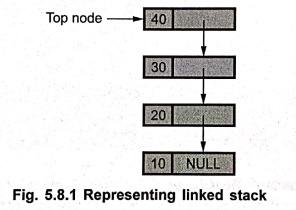
Each node consists of data and the next field. Such a node will be inserted in
the stack. Following Fig. 5.8.1 represents stack using linked list.
•
There are various operations that can be performed on the linked stack. These
operations are
1. Push operation
The
pseudo code for push operation is as given below.
void Lstack::Push(int Item, node **top)
{
node *New;
New= new node;
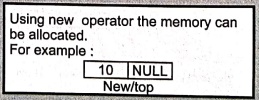
//Using new operator the memory can be allocated.
For example:
New‒>next=NULL;
New‒>data=Item;
New‒> next = *top;
*top = New;
}
In
the main function, when the item to be inserted is entered, a call to push
function is given.
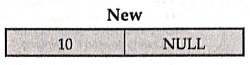
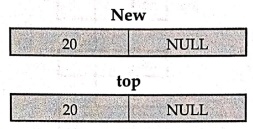
If
item = 10, then by new node will be allocated. Then
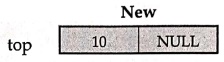
*top =
New
This
is our new top node. Hence stack
will look like this
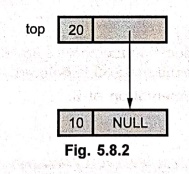
If
again Push function is called for
pushing the value 20 then
This
can be done using following statements ‒
New‒>next=*top;
top=New;
And
we will get
When
30 is pushed then
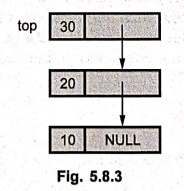
Thus
by pushing the items repeatedly we can create a stack using linked list.
2. Pop operation
int Lstack::Pop(node **top)
{
int item;
node *temp;
item = (*top) ‒>data;
// We want to delete top node. Hence in order to
remember the data being deleted it is already stored In Item
temp = *top;
*top = (*top)‒>next;
//Taking the address of top in temp node
//and assigning new top to the next node.
delete temp;
return (item);
}
If
stack is as follows.
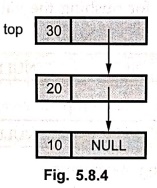
Then
we will write following for deletion operation
item= *(top)‒>data
then item=30
temp=*top
*top=*top‒>next now top =20
delete temp;
deallocating memory of node 30. That means node 30 is deleted.
Let
us now see the C++ implementation of it.
C++ Program
/*********************************************************
Program for creating the stack using the linked list. Program
performs all the operations such as push,pop and display.It takes care of stack
underflow condition. There can not be stack full condition in stack using
linked list.
***********************************************************/
#include<iostream>
#include<cstdlib>
using namespace std;
//Declaration for data structure of linked stack
class Lstack
{
private:
typedef struct stack
{
int data;
struct stack *next;
}node;
node *top;
public:
Lstack();
~Lstack();
void create(),remove(),show();
void Push(int, node **);
void Display(node **);
int Pop(node **);
int Sempty(node *);
};
/*
‒‒‒‒‒‒‒‒‒‒‒‒‒‒‒‒‒‒‒‒‒‒‒‒‒‒‒‒‒‒‒‒‒‒‒‒‒‒‒‒‒‒‒‒‒‒‒‒‒‒‒‒‒‒‒‒‒‒‒‒‒‒‒‒‒‒‒‒‒‒‒‒‒‒‒‒
The constructor defined
‒‒‒‒‒‒‒‒‒‒‒‒‒‒‒‒‒‒‒‒‒‒‒‒‒‒‒‒‒‒‒‒‒‒‒‒‒‒‒‒‒‒‒‒‒‒‒‒‒‒‒‒‒‒‒‒‒‒‒‒‒‒‒‒‒‒‒‒‒‒‒‒‒‒‒‒
*/
Lstack::Lstack()
{
top = NULL;
}
/*
‒‒‒‒‒‒‒‒‒‒‒‒‒‒‒‒‒‒‒‒‒‒‒‒‒‒‒‒‒‒‒‒‒‒‒‒‒‒‒‒‒‒‒‒‒‒‒‒‒‒‒‒‒‒‒‒‒‒‒‒‒‒‒‒‒
The destructor defined
‒‒‒‒‒‒‒‒‒‒‒‒‒‒‒‒‒‒‒‒‒‒‒‒‒‒‒‒‒‒‒‒‒‒‒‒‒‒‒‒‒‒‒‒‒‒‒‒‒‒‒‒‒‒‒‒‒‒‒‒‒‒‒‒‒
*/
Lstack:: Lstack()
{
node *temp;
temp=top;
if(temp= =NULL)
delete temp;
else
{
while(temp!= NULL)
{
temp=temp‒>next;
top=NULL;
top=temp;
}
delete temp://de
allocating memory
}
}
/*
‒‒‒‒‒‒‒‒‒‒‒‒‒‒‒‒‒‒‒‒‒‒‒‒‒‒‒‒‒‒‒‒‒‒‒‒‒‒‒‒‒‒‒‒‒‒‒‒‒‒‒‒‒‒‒‒‒‒‒‒‒‒‒‒‒
The create function
‒‒‒‒‒‒‒‒‒‒‒‒‒‒‒‒‒‒‒‒‒‒‒‒‒‒‒‒‒‒‒‒‒‒‒‒‒‒‒‒‒‒‒‒‒‒‒‒‒‒‒‒‒‒‒‒‒‒‒‒‒‒‒‒‒
*/
void Lstack::create()
{
int data;
cout<<"\n
Enter the data";
cin>>data;
Push(data,&top);
}
/*
‒‒‒‒‒‒‒‒‒‒‒‒‒‒‒‒‒‒‒‒‒‒‒‒‒‒‒‒‒‒‒‒‒‒‒‒‒‒‒‒‒‒‒‒‒‒‒‒‒‒‒‒‒‒‒‒‒‒‒‒‒‒‒‒
The remove function
‒‒‒‒‒‒‒‒‒‒‒‒‒‒‒‒‒‒‒‒‒‒‒‒‒‒‒‒‒‒‒‒‒‒‒‒‒‒‒‒‒‒‒‒‒‒‒‒‒‒‒‒‒‒‒‒‒‒‒‒‒‒‒‒
*/
void Lstack::remove()
{
int item;
if(Sempty(top))
cout<<"\n
stack underflow!";
else
{
item = Pop(&top);
cout<<"\n
The popped node is "<<<< item;
}
}
/*
‒‒‒‒‒‒‒‒‒‒‒‒‒‒‒‒‒‒‒‒‒‒‒‒‒‒‒‒‒‒‒‒‒‒‒‒‒‒‒‒‒‒‒‒‒‒‒‒‒‒‒‒‒‒‒‒‒‒‒‒‒‒‒‒‒‒‒‒‒‒
The show function
‒‒‒‒‒‒‒‒‒‒‒‒‒‒‒‒‒‒‒‒‒‒‒‒‒‒‒‒‒‒‒‒‒‒‒‒‒‒‒‒‒‒‒‒‒‒‒‒‒‒‒‒‒‒‒‒‒‒‒‒‒‒‒‒‒‒‒‒‒‒
*/
void Lstack::show()
{
Display(&top);
}
/*
‒‒‒‒‒‒‒‒‒‒‒‒‒‒‒‒‒‒‒‒‒‒‒‒‒‒‒‒‒‒‒‒‒‒‒‒‒‒‒‒‒‒‒‒‒‒‒‒‒‒‒‒‒‒‒‒‒‒‒‒‒‒‒‒‒‒‒‒‒‒‒‒‒‒‒‒
The Push function
‒‒‒‒‒‒‒‒‒‒‒‒‒‒‒‒‒‒‒‒‒‒‒‒‒‒‒‒‒‒‒‒‒‒‒‒‒‒‒‒‒‒‒‒‒‒‒‒‒‒‒‒‒‒‒‒‒‒‒‒‒‒‒‒‒‒‒‒‒‒‒‒‒‒‒‒‒
*/
void Lstack::Push(int Item, node **top)
{
node *New
New = new node;
New‒>next=NULL;
New‒>data=Item;
New‒>next = *top;
*top = New;
}
*/
‒‒‒‒‒‒‒‒‒‒‒‒‒‒‒‒‒‒‒‒‒‒‒‒‒‒‒‒‒‒‒‒‒‒‒‒‒‒‒‒‒‒‒‒‒‒‒‒‒‒‒‒‒‒‒‒‒‒‒‒‒‒‒‒‒‒‒‒‒‒‒‒‒‒‒‒‒‒‒‒
The Sempty Function
‒‒‒‒‒‒‒‒‒‒‒‒‒‒‒‒‒‒‒‒‒‒‒‒‒‒‒‒‒‒‒‒‒‒‒‒‒‒‒‒‒‒‒‒‒‒‒‒‒‒‒‒‒‒‒‒‒‒‒‒‒‒‒‒‒‒‒‒‒‒‒‒‒‒‒‒‒‒‒‒‒
*/
int Lstack::Sempty(node *temp)
{
if(temp= =NULL)
return 1;
else
return 0;
}
/*
‒‒‒‒‒‒‒‒‒‒‒‒‒‒‒‒‒‒‒‒‒‒‒‒‒‒‒‒‒‒‒‒‒‒‒‒‒‒‒‒‒‒‒‒‒‒‒‒‒‒‒‒‒‒‒‒‒‒‒‒‒‒‒‒‒‒‒‒‒‒‒
The Pop function
‒‒‒‒‒‒‒‒‒‒‒‒‒‒‒‒‒‒‒‒‒‒‒‒‒‒‒‒‒‒‒‒‒‒‒‒‒‒‒‒‒‒‒‒‒‒‒‒‒‒‒‒‒‒‒‒‒‒‒‒‒‒‒‒‒‒‒‒‒‒‒‒
*/
int Lstack::Pop(node **top)
{
int item;
node *temp;
item = (*top) ‒>data;
temp = *top;
*top = (*top)‒>next;
delete temp;
return(item);
}
/*
‒‒‒‒‒‒‒‒‒‒‒‒‒‒‒‒‒‒‒‒‒‒‒‒‒‒‒‒‒‒‒‒‒‒‒‒‒‒‒‒‒‒‒‒‒‒‒‒‒‒‒‒‒‒‒‒‒‒‒‒‒‒‒‒‒‒‒‒‒‒
The Display function
‒‒‒‒‒‒‒‒‒‒‒‒‒‒‒‒‒‒‒‒‒‒‒‒‒‒‒‒‒‒‒‒‒‒‒‒‒‒‒‒‒‒‒‒‒‒‒‒‒‒‒‒‒‒‒‒‒‒‒‒‒‒‒‒‒‒‒‒‒‒
*/
void Lstack::Display(node **head)
{
node *temp;
temp = "head;
if(Sempty(temp))
cout<<"\n
The stack is empty!";
else
{
while (temp = NULL)
{
cout<<"
"<<temp‒> data;
temp = temp ‒>
next;
}
}
getch();
}
/*
‒‒‒‒‒‒‒‒‒‒‒‒‒‒‒‒‒‒‒‒‒‒‒‒‒‒‒‒‒‒‒‒‒‒‒‒‒‒‒‒‒‒‒‒‒‒‒‒‒‒‒‒‒‒‒‒‒‒‒‒‒‒‒‒‒‒‒‒‒‒‒‒‒
The main function
‒‒‒‒‒‒‒‒‒‒‒‒‒‒‒‒‒‒‒‒‒‒‒‒‒‒‒‒‒‒‒‒‒‒‒‒‒‒‒‒‒‒‒‒‒‒‒‒‒‒‒‒‒‒‒‒‒‒‒‒‒‒‒‒‒‒‒‒‒‒‒‒‒
*/
void main()
{
int choice;
char ans,ch;
Lstack st;
clrscr();
cout<<"\n\t\t Stack Using Linked List";
do
{
cout<<"\n\n
The main menu";
cout<<"\n1.Push\n2.Pop\n3.Display\n4.Exit";
cout<<"\n
Enter Your Choice";
cin>>choice;
switch(choice)
{
case 1:st.create();
break;
case 2:st.remove();
break;
case 3:st.show();
break;
case 4:exit(0);
}
cout<<"\n Do
you want to continue?";
ans =getche();
getch();
clrscr();
}while(ans = ='Y' ||ans
= ='y');
getch();
}
Output
The main menu
1.Push
2.Pop
3.Display
4.Exit
Enter Your Choice1
Enter the data10
Do you want to
continue?
The main menu
1.Push
2.Pop
3.Display
4.Exit
Enter Your Choice1
Enter the data20
Do you want to
continue?
The main menu
1.Push
2.Pop
3.Display
4.Exit
Enter Your Choice1
Enter the data30
Do you want to
continue?
The main menu
1.Push
2.Pop
3.Display
4.Exit
Enter Your Choice1
Enter the data40
Do you want to
continue?
The main menu
1.Push
2.Pop
3.Display
4.Exit
Enter Your Choice1
Enter the data50
Do you want to
continue?
The main menu
1.Push
2.Pop
3.Display
4.Exit
Enter Your Choice3
50 40 30 20 10
Do you want to
continue?
In push function :
The
memory for 'New' node is allocated using new operator. In 'New' node we will
put the data.
Initially
top = NULL, hence
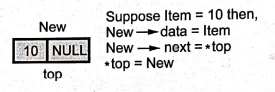
Suppose
Item = 10 then,
New→data
= Item
New
→ next = *top
*top
= New
Now
make 'New' node as 'top' node. When we push next item as 20 then,
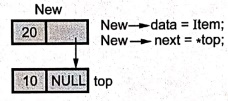
New→data
= Item;
New→ next = *top;
Now
make 'New' node as 'top' node.
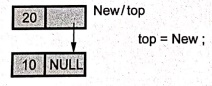
top
= New ;
In POP function
We
will POP the element which is at the top. Consider a scenario that we have a
stack of
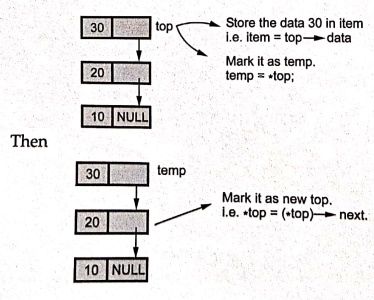
Then
delete 'temp' node.
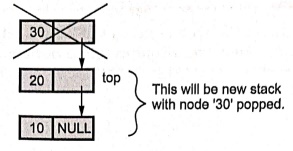
This
will be new stack with node '30' popped.
Review Questions
1. Using linked list,
formulate separate routines to create an empty stack and to push an element
onto a stack.
2. Write a C++ program
to implement stack through linked list.
3. Write a program to
implement STACK through linked list.
Data Structures using C PlusPlus: Chapter 5: Linked Lists : Tag: Data Structure, C++ Programing : C++ Programing - Linked List based Implementation of Stacks
Data Structures using C PlusPlus: Chapter 5: Linked Lists
Under Subject
Data Structures using CPlusPlus
CS25C05 2nd Semester ECE Dept | 2025 Regulation | 2nd Semester 2025 Regulation
Related Subjects

English Essentials II
EN25C02 2nd Semester | 2025 Regulation | 2nd Semester 2025 Regulation

Tamils and Technology தமிழர்களும் தொழில்நுட்பமும்
UC25H02 2nd Semester | 2025 Regulation | 2nd Semester 2025 Regulation
Linear Algebra
MA25C02 2nd Semester | 2025 Regulation

Electron Devices
EC25C01 2nd Semester ECE Dept | 2025 Regulation | 2nd Semester 2025 Regulation
Data Structures using CPlusPlus
CS25C05 2nd Semester ECE Dept | 2025 Regulation | 2nd Semester 2025 Regulation

Circuits and Network Analysis
EC25C02 2nd Semester ECE Dept | 2025 Regulation | 2nd Semester 2025 Regulation

Re-Engineering for Innovation
ME25C05 2nd Semester | 2025 Regulation | 2nd Semester 2025 Regulation
Engineering Drawing - Laboratory
ME25C01 2nd Semester | 2025 Regulation | 2nd Semester 2025 Regulation
Data Structures using CPlusPlus - Laboratory
CS25C05 2nd Semester ECE Dept | 2025 Regulation | 2nd Semester 2025 Regulation
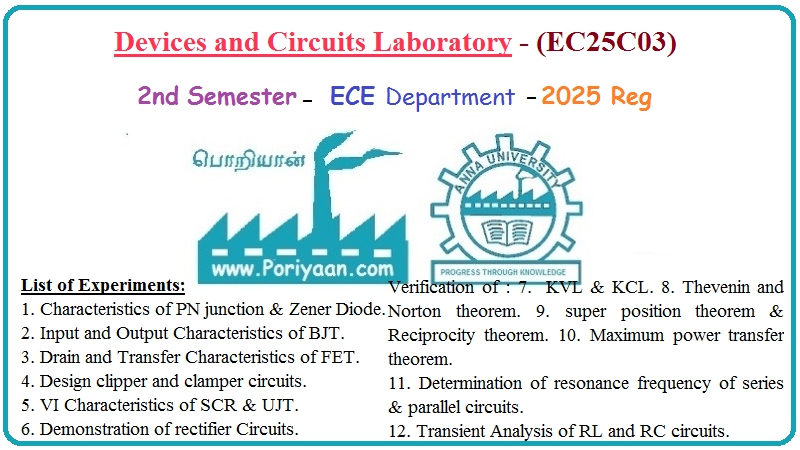
Devices and Circuits Laboratory
EC25C03 2nd Semester ECE Dept | 2025 Regulation | 2nd Semester 2025 Regulation