Applied Chemistry I: UNIT 5: Batteries
Battery Pack
Construction, Pack design, Applications, Advantages and disadvantages
1. Construction of battery pack 2. Battery pack design of electric vehicles 3. Applications of battery packs in different fields 4. Advantages and disadvantages of battery packs
BATTERY PACK
Battery pack generally
refers to a collection of batteries that are assembled together to provide more
power. Battery packs can be used in various applications such as in electric
vehicles, power tools (or) as part of larger systems. They can be designed for
specific voltages and capacities based on their intended use.
1. Construction of battery pack
Generally a battery
pack is merely a bunch of batteries, connected in series (or) parallel
configuration, with one positive and one negative terminal. It also includes a
thermal management system, a battery management system, a mechanical structure
and enclosure as well as high voltage and low‒voltage wiring harnesses and
connections.
2. Battery pack design of electric vehicles
Battery packs have
different designs involving electrochemical, mechanical control and
thermodynamic principles. For EVS applications, many individual cells are
stacked in a specific order for making the interconnection between batteries
for power flow. Battery packs are very expensive, especially for EVS
applications due to a high number of cells.
Steps involved in battery packs design
The battery pack design
consists of many steps such as
Step
1: Select
the battery cell technology and the pack specifications by battery sizing.
Step
2: Battery
pack designing (electrical, control and structural)
Step
3: Battery
pack safety and testings.
For the battery to be
used, the primary parameter is the energy density of the cell, which decides
the driving range, speed and acceleration of the vehicles.
Important calculations required for battery packaging
Battery packaging
required some calculations, which are discussed in the following steps.
Step 1: Calculation of battery voltages
The essential
requirement of any vehicle is maintaining the required voltage during the
operations. The required voltage can be obtained by connecting the multiple
cells in series and the voltage can be calculated
V = nv
V= Voltage of the
battery
n = number of cells
v = cell voltage
Step 2: Calculation of battery pack size
The battery pack size
(S) can be calculated by
S = VA'
where,
V = Voltage (obtained
from above equation)
A' = Ampere rating of
the cells
Step 3 Calculation of weight (W) of a battery
Weight (W) of a battery
can be calculated by
W = SC
Where, S= pack size
(obtained from above equation)
C = Capacity of the
battery (known in W.h/mile)
Step 4 Calculation of battery range
The battery range (R)
is calculated by
R = S/V
S = Pack size
C = Capacity of the battery
Step
5 Calculation of battery power
The power required,
delivered by the battery, for moving a vehicle can be calculated by
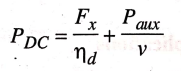
where,
PDC = DC
energy usage of an vehicle (in W.h/km)
ηd = Overall
constant efficiency
Paux = Power
uses of the auxiliary system
Fx = Force
required to move the vehicle
v
= Energy consumption.
After calculating the
above parameters, an extra 19% is added to the battery capacity. This is due to
the reason that only 81% of the battery capacity is normally utilized and the
efficiency of battery charging is considered to be only 81%.
3. Applications of battery packs in different fields
Battery packs are used
in a wide range of applications from powering portable electronics to providing
backup power for critical systems. The main applications include.
1. Customer electronics
Battery packs are used
to provide power to laptops, smartphones, cameras, toys, portable audio
players.
2. Industrial applications
It also provides power
to fork lifts, uninterruptible power supplies (UPS), Remote monitoring system,
robotics.
3. Medical devices
It provides power to
portable monitoring equipments like ECG machines, vital sign monitors, hearing
aids, wheel chairs, life support systems.
4. Transportation
It provides power to
electric vehicles (EVs) (like electric cars, buses, motor cycles, scooters
etc).
5. Renewable energy systems
Battery packs are
essential for storing energy, generated from renewable sources (like solar
power systems, wind power systems)
6. Other applications
Power packs are used to
power emergency lightings, security systems, military applications, cordless
tools, etc..
4. Advantages and disadvantages of battery packs
Advantages
1. Primary advantage is
portability and convenience.
2. It stores energy for
later use and provide backup power during outages.
3. Batteries store excess
energy, generated from solar panels (or) wind turbines, making renewable energy
more reliable.
4. Batteries can help
reduce energy costs by allowing users to store energy during off‒peak hours and
use it during peak hours.
5. It reduces the consumption
of fossil fuels and lower green house gas emissions.
Disadvantages
1. Battery packs are
expensive to purchase.
2. Lifespan is limited.
3. Manufacturing
process (extraction of raw‒materials) have significant environmental problems.
4. Improper disposal
also can lead to environmental risk.
5. Extreme temperature
can affect its performance.
6. Charging of battery
packs will take more time.
Applied Chemistry I: UNIT 5: Batteries : Tag: Applied Chemistry : Construction, Pack design, Applications, Advantages and disadvantages - Battery Pack
Applied Chemistry I: UNIT 5: Batteries
Under Subject

Applied Chemistry I
CY25C01 1st Semester | 2025 Regulation | 1st Semester 2025 Regulation
Related Subjects

English Essentials I
EN25C01 1st Semester | 2025 Regulation | 1st Semester 2025 Regulation

தமிழர் மரபு - Heritage of Tamils
UC25H01 1st Semester | 2025 Regulation | 1st Semester 2025 Regulation
Applied Calculus
MA25C01 Maths 1 M1 - 1st Semester | 2025 Regulation | 1st Semester 2025 Regulation
Applied Physics I
PH25C01 1st Semester | 2025 Regulation | 1st Semester 2025 Regulation
Applied Chemistry I
CY25C01 1st Semester | 2025 Regulation | 1st Semester 2025 Regulation
Makerspace
ME25C04 1st Semester | 2025 Regulation | 1st Semester 2025 Regulation
Computer Programming C
CS25C01 1st Semester | 2025 Regulation | 1st Semester 2025 Regulation
Computer Programming Python
CS25C02 1st Semester | 2025 Regulation | 1st Semester 2025 Regulation
Fundamentals of Electrical and Electronics Engineering
EE25C03 1st Semester | 2025 Regulation | 1st Semester 2025 Regulation
Introduction to Mechanical Engineering
ME25C03 1st Semester | 2025 Regulation | 1st Semester 2025 Regulation

Introduction to Civil Engineering
CE25C01 1st Semester Civil Department | 2025 Regulation | 1st Semester 2025 Regulation
Essentials of Computing
CS25C03 1st Semester - AID CSE IT Department | 2025 Regulation | 1st Semester 2025 Regulation

Applied Physics I Laboratory
PH25C01 1st Semester practical Laboratory Manual | 2025 Regulation | 1st Semester Laboratory 2025 Regulation

Applied Chemistry I Laboratory
CY25C01 1st Semester practical Laboratory Manual | 2025 Regulation | 1st Semester Laboratory 2025 Regulation

Computer Programming C Laboratory
CS25C01 1st Semester practical Laboratory Manual | 2025 Regulation | 1st Semester Laboratory 2025 Regulation

Computer Programming Python Laboratory
CS25C02 1st Semester practical Laboratory Manual | 2025 Regulation | 1st Semester Laboratory 2025 Regulation
Engineering Drawing
ME25C01 EEE Mech Dept | 2025 Regulation | 2nd Semester 2025 Regulation

Basic Electronics and Electrical Engineering
EE25C04 1st Semester ECE Dept | 2025 Regulation | 2nd Semester 2025 Regulation