Tamils and Technology: Unit IV: Agriculture and Irrigation Technology
Wells Designed for Livestock
Tamils Agriculture, Irrigation Technology
Tamils Agriculture, Irrigation Technology: 1. Wells 2. Dew Pond (or) Dew Well 3. Ice Basins of Sangam Period
WELLS DESIGNED FOR
LIVESTOCK
1. Wells
A
well is a deep hole dug in the ground to access natural resources. Generally,
wells were originally designed by the Sangam people for peoples' and
livestocks' drinking purposes. Wells have been used in many cultures around the
world for over 8000 years. The first wells would have probably been dug
manually or with very simple tools. They stored water and provided access to
bring ground water to the surface.
Cattle
herders dig small holes in the earth with sharp sticks held in their hands. The
following Purananooru verse mentions that the water kept soaking in such dug
pits were used by the cattle for drinking and the women used it for cooking.
This
generation knows only a few bodies of water like lakes, ponds and rivers. But
our forefathers created and maintained more than 40 water sources. Renovation
and maintenance of those water bodies is enough to prevent water shortage in
Tamil Nadu. From the books noted below, it can be understood about well
drilling, nature of wells and water levels.
Proofs
1.
Mayamatham: Kodumudi S. Shanmugam mentions that we had an engineering text
called 'Mayamatham' which explained constructions like well digging, etc.,
2.
Gnanavalliyam: This is a book which describes the nature of the land for drilling
wells.
3.
Koomanool: It is a book that helps us to know the state of water.
2. Dew Pond (or) Dew Well
A
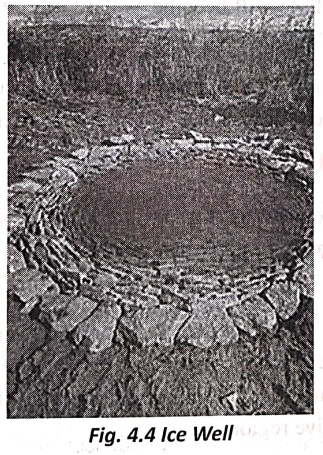
snow lake is an artificial lake usually located on the top of a mountain. It is
generally designed for providing water for livestock. Ice ponds are used in
areas where a natural supply of surface water is not readily available. There
are evidences that these ice ponds were used for cattle during the Sangam
period.
Proof
In
1865, the Journal of the Royal Agricultural Society mentions about Panikulam.
In which it is believed that the source of water is rain instead of snow or
fog.
Construction
Ice
ponds are usually shallow and saucer-shaped. These are lined with clay and lime
on top of an insulating layer of straw on top of the lime underlayer. Lime or
charcoal is mixed with the clay to prevent upward burrowing by earthworms. This
makes the clay porus.
The
clay is usually covered with straw to prevent cracking by the sunlight. To
retain more rain, the clay layer can be extended throughout the catchment area
of the pond. Evaporation is reduced if the pond temperature is low. Thus, the
collected rain water is maintained.
Proof
According
to the researcher Edward Martin, this can be achieved by building the pond in a
hollow, where cold air gathers and keeps the surrounding grass long enough to
increase heat radiation,
As
the water level drops in the basin, cool, moist air is formed at the surface of
the well, limiting evaporation.
Proof
The
Field 14 December 1907 describes a method of forming a base layer using lime
slurry.
3. Ice Basins of Sangam Period
A
farmer born in 1850 tells how their ancestors made ice ponds.
A
hole of required size is dug and a layer of lime is laid down. It was ground
well by bullocks locked on a heavy stone wheel, then sprinkled with water and
ground well with this wheel for a whole day to form a paste (cream). After a
few days, without snow or heavy rain, the lime will become as hard as cement as
a bridge. These will protect the stored water from leaking for years.
This
ancient method of forming ice ponds seems to have died out when the oxen
disappeared from the Sussex hills.
Tamils and Technology: Unit IV: Agriculture and Irrigation Technology : Tag: Tamil : Tamils Agriculture, Irrigation Technology - Wells Designed for Livestock
Tamils and Technology: Unit IV: Agriculture and Irrigation Technology
Under Subject
Tamils and Technology தமிழர்களும் தொழில்நுட்பமும்
UC25H02 2nd Semester | 2025 Regulation | 2nd Semester 2025 Regulation
Related Subjects
English Essentials II
EN25C02 2nd Semester | 2025 Regulation | 2nd Semester 2025 Regulation
Tamils and Technology தமிழர்களும் தொழில்நுட்பமும்
UC25H02 2nd Semester | 2025 Regulation | 2nd Semester 2025 Regulation
Linear Algebra
MA25C02 2nd Semester | 2025 Regulation
Transforms and its Applications
MA25C03 2nd Semester EEE Dept | 2025 Regulation | 2nd Semester 2025 Regulation

Applied Physics (CE) II
PH25C02 2nd Semester Civil, Agri Depts | 2025 Regulation | 2nd Semester 2025 Regulation
Applied Physics (CSIE) II
PH25C03 2nd Semester AIDS, CSE, IT, CSE(CY) Dept | 2025 Regulation | 2nd Semester 2025 Regulation
Applied Physics (EE) II
PH25C04 2nd Semester EEE Dept | 2025 Regulation | 2nd Semester 2025 Regulation

Applied Physics (ME) II
PH25C05 2nd Semester Mechanical Dept | 2025 Regulation | 2nd Semester 2025 Regulation
Applied Chemistry (CE) II
CY25C02 2nd Semester Civil Dept | 2025 Regulation | 2nd Semester 2025 Regulation

Applied Chemistry (ME) II
CY25C03 2nd Semester Mechanical Dept | 2025 Regulation | 2nd Semester 2025 Regulation

Electron Devices
EC25C01 2nd Semester ECE Dept | 2025 Regulation | 2nd Semester 2025 Regulation
Digital Principles and Computer Organization
CS25C06 2nd Semester AIDS, CSE, IT, CSE(CY) Dept | 2025 Regulation | 2nd Semester 2025 Regulation

Basic Electrical and Electronics Engineering
EE25C01 2nd Semester | 2025 Regulation | 2nd Semester 2025 Regulation

Basic Civil and Mechanical Engineering
GE25C01 2nd Semester EEE Dept | 2025 Regulation | 2nd Semester 2025 Regulation
Data Structures using CPlusPlus
CS25C05 2nd Semester ECE Dept | 2025 Regulation | 2nd Semester 2025 Regulation
Engineering Drawing
ME25C01 EEE, Mech, Agri, EEE Depts | 2025 Regulation | 2nd Semester 2025 Regulation
Data Structures and Algorithms
CS25C04 2nd Semester EEE Dept | 2025 Regulation

Circuits and Network Analysis
EC25C02 2nd Semester ECE Dept | 2025 Regulation | 2nd Semester 2025 Regulation

Engineering Mechanics
ME25C02 2nd Semester Mech, Civil, Agri Depts | 2025 Regulation | 2nd Semester 2025 Regulation
Object Oriented Programming (OOPs)
CS25C07 2nd Semester CSE, CSE(CY) Depts | 2025 Regulation | 2nd Semester 2025 Regulation