Tamils and Technology: Unit II: Design and Construction Technology
Great Temples and other places of worship of the Chola period
Tamils and Technology
1. Pragadeeswarar Temple, Thanjavur 2. Gangaikonda Cholapuram Siva Temple, Ariyalur 3. Iradeeswarar Temple, Tharasuram 4. Thillai Natarajar Temple, Chidambaram 5. Thiagaraja Swamy Thirukoil, Tiruvarur 6. Rajagopalaswamy Tirukkoil, Mannargudi 7. Sri Kumbeshwarar Temple, Kumbakonam 8. Swedharanyeswarar Temple, Tiruvenkadu 9. Sri Kambahareshwarar Temple, Kumbakonam 10. Kalyana Pasupatheeshwarar Temple, Karur 11. Jambulingeshwar Temple, Tiruvanaikaval 12. Someshwarar Temple, Kumbakonam 13. Sri Mayuranathaswamy Temple, Mayiladuthurai
GREAT TEMPLES AND OTHER
PLACES OF WORSHIP OF THE CHOLA PERIOD
Architects
and historians consider Chola architecture as a continuation of the style
pioneered by the Pallavas.
Cholas
started building many temples since Vijayalayan defeated the Muthraiyas and
established the Chola's rule in Tamil Nadu.
But,
the buildings of the Chola period before Rajaraja-I were not big. However,
during the period of Rajarajan and his son Rajendra Chola Thanjai Great Temple,
Gangai Konda Cholapuram temple and Iradeeswarar temple began to appear.
Among
these, The Tanjai Great Temple which was completed in 1009 AD is the crowning
master piece of Chola architecture. Like this temple, numerous other temples
were built by the Cholas in Tamil Nadu. Here, let us see some of the notable
temples.
1. Pragadeeswarar Temple, Thanjavur
The
construction of Thanjavur big temple was started in AD 1003 and finished in AD
1009 during the reign of Rajarajan I. The chief sculptor who built this temple
is mentioned in the inscriptions of the temple as Kuncharamallan Rasarasa
Perumthatchan.
Rajaraja
Cholan's construction of a 59.40 m high stone temple with 15 floors in the
Cauvery plains where no stones are found is a great world record.
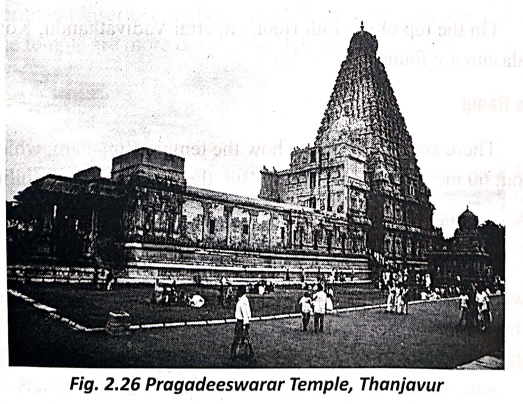
The
exterior of this temple measures 240x125 metres. The base of the temple is 16
feet high. Dance sculptures depicting 108 Bharathanatiam mudras have been
designed on the top of the outer wall.
The
Rajalingam in the Sanctum Sanctorum of this temple is 3.7 metres high. The
Nandi idol in front of it is made of a single stone. It is 14.0 metres high,
7.0 metres long and 3.0 metres wide.
The
tower has a total of 15 floors including two floors of sanctum sanctorum and 13
floors of Vimanam. The height of the first floor is about 4.40 metres; the
height of the 13th floor is about 1.92 metres. The total height of the 13
floors is 32.5 metres.
On
the top of the 13th floor, enpattai Vadivathandu, Kolam, Kalasam are found.
The Ramp
There
are no clues as to how the temple Vimanam, which is about 60 metres high, was
built. But, there are some possibilities.
Phase I (Ramp)
The
height of the sanctum sanctorum including the upper and lower floors is 16.5
metres. A number of ramps have been used to build it. They are made of stones
and lime mixture and are laid with a moderate slope to enable the elephants to
move.
Phase 2 (Aranmathil
Saram)
It
is clear that the essence of a solid aranmathil saram was laid around the four
sides of the vimanam to build the second phase from 16.5 m to 33 metres high.
Later,
Amman shrine was built by Pandyas, Muruga shrine by Vijayanagara Kings,
Vinayaga shrine by Maratha Kings, front porch and Nandhi mandapam by Thanjai
Nayakas.
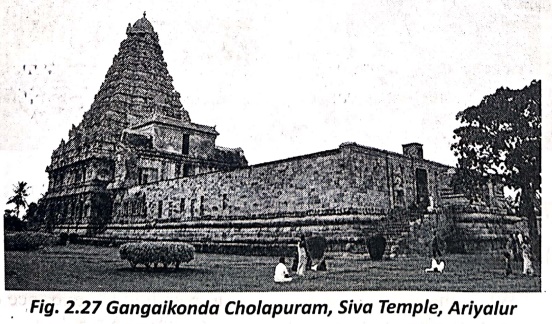
2. Gangaikonda Cholapuram Siva Temple, Ariyalur
This
temple is a testament to the high quality of art and architecture of the
Cholas. In 1036 AD, A Shiva temple was built at Gangaikonda Cholapuram by
Rajendra Cholan I. He conquered the entire east coast of India and invaded upto
the river Ganges and built a city called Gangaikonda Cholapuram and built a
Shiva temple there. This temple is famous not only for being built by the
Cholas but also for having the largest Shivalingam in South India. The
Shivalingam in the Sanctum Sanctorum of this temple is 4 metre high. The
historical events of the Chola dynasty and their government inscribed in the
copper plate inscriptions on the walls of the temple are more descriptive than
any other historical text.
The
information that many villages were donated to this temple in the 24th year of
the rein of Rajendra Chola I is available from the records of Veera Rajendra
Cholan who ruled in 1068 AD. The special feature of this temple is that there
are many sculptures brought from Andhra, Karnataka and Bengal.
3. Iradeeswarar Temple, Tharasuram
Airavadeshwarar
temple was built in the 12th century by Rasarasa II, an important Chola temple
at Tharasuram near Kumbakonam. Although it is smaller than the Gangai Konda
Cholapuram and Prahadeeswarar temples, the sculptures in this Airavatham Temple
are very intricately carved. The Iradeeswarar temple is arranged like a chariot
which is pulled by horses. Indiran's elephant Iravatham lost its colour due to
the curse of the hermit Durvasa. The elephant came here and worshipped Shiva
and as result it got relief from the curse. Hence, it is said that this temple
got its name as Iravatheeshwarar Temple.
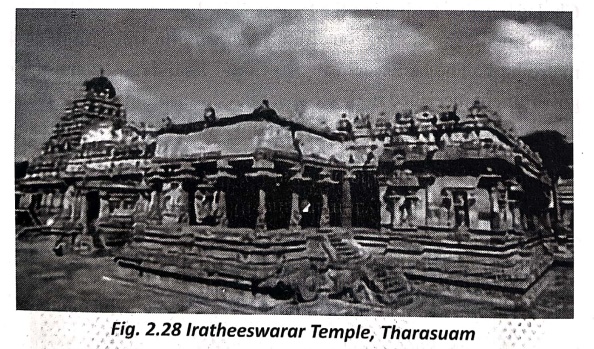
The Special Features of
the Temple
(i) Music Steps
When
the steps of the altar next to Nandi at the entrance of the temple is tapped,
the sound 'sari gama pathani' is heard.
(ii) Chariot like Hall
A
chariot like Mahamandapam has been designed to be pulled by elephants and
horses known as Airavatham. Its steps are designed to look like horses pulling
a chariot on one side and the elephants on the other.
(iii) Sculptures
The
four sides of each of the pillars in the temple have mythological carvings.
Dwarabalagas
are found on both sides of the lingam in the sanctum sanctorum.
Saraswati
without Veena in hand, Nagarasan, Annapoorani, Arthanareeswarar with three
faces and eight hands have been carved on the walls.
The
images of Nayanmars and 108 followers of Lord Shiva have been engraved in the
praharam of the hall.
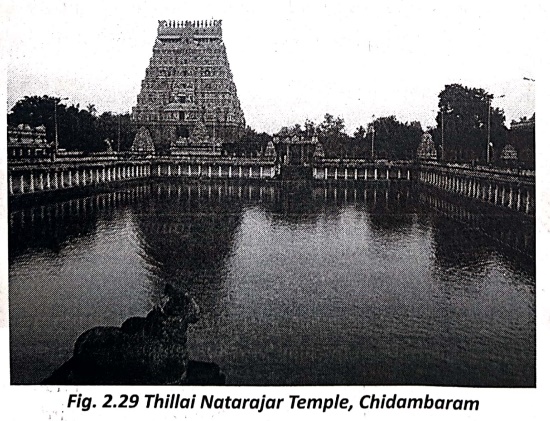
4. Thillai Natarajar Temple, Chidambaram
Thillai
Nataraja Temple has always had a special place among the symbols of the Chola
Dynasty. The Sanctum Sanctorum of this temple has been built with golden
Vimanam with eleborate stone carvings.
Parantaka
Chola, the son of Adhitya Chola is said to have built this goldon canopy.
Through this, he got the title of 'Ponveintha Cholan'. During Sivarathiri,
Natyanchali dance performance is arranged in Nataraja Temple for five days.
5. Thiagaraja Swamy Thirukoil, Tiruvarur
Thiagarajaswamy
Temple, built by the Chola Kings and one of the oldest temples in Tamil Nadu,
dates back to the 1st Century. Th moolasthanam of this temple is divided into
two parts. One part is dedicated to Lord Shiva and the other part is dedicated
to Thiagarajar.
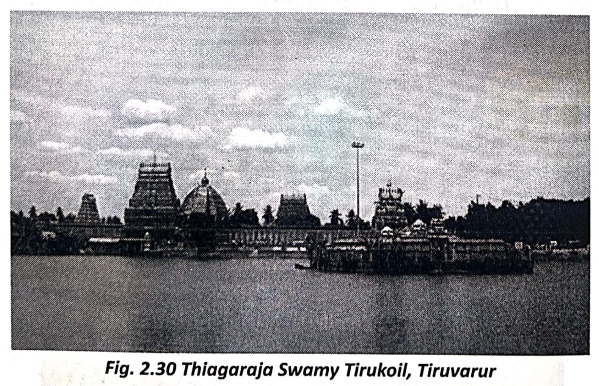
A section dedicated to Vanmiginathar is older than the section dedicated to Thiagaraja. In Vanmiginathar's Sannithi, instead of the usual lingam, a pit (Putru) has been installed.
6. Rajagopalaswamy Tirukkoil, Mannargudi
The
Rajagopalaswamy Temple complex is spread over an area of about 23 acres with 24
Sannidhis, 16 tall towers, 7 courtyards, 7 halls and 9 ponds.
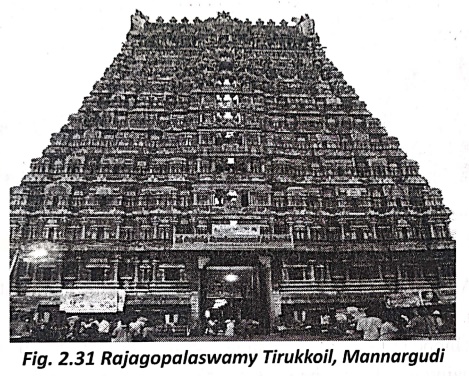
The
temple was built during the reign of Kulothunga Chola and was renovated by
various Chola Kings who came after him. Later on, during the reign of Nayak
Kings, it was expanded. The pond is one of the largest temple ponds in India.
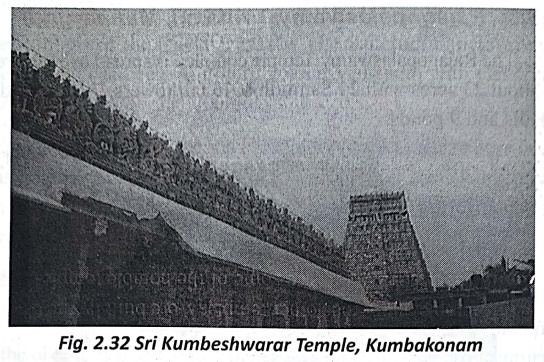
7. Sri Kumbeshwarar Temple, Kumbakonam
Sri
Kumbeshwarar Temple located in Kumbakonam is a Shivalyam. It is in this temple,
Masimaga festival is celebrated every year. Mahamaha festival is celebrated
every 12 years. The temple is believed to be 1300 years old.
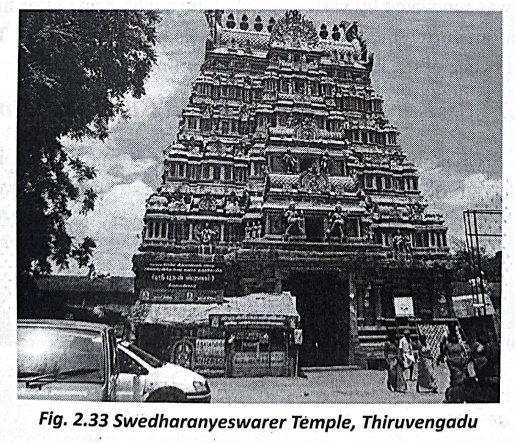
8. Swedharanyeswarar Temple, Tiruvenkadu
Among
the nine navagraha locations in Tamil Nadu, it is the fourth. In this temple,
Budhan God who offers knowledge, wealth is worshipped by making a separate
sannithi. The murals here have been painted to know the important historical
information of the Chola empire and the Kings of Vijayanagar.
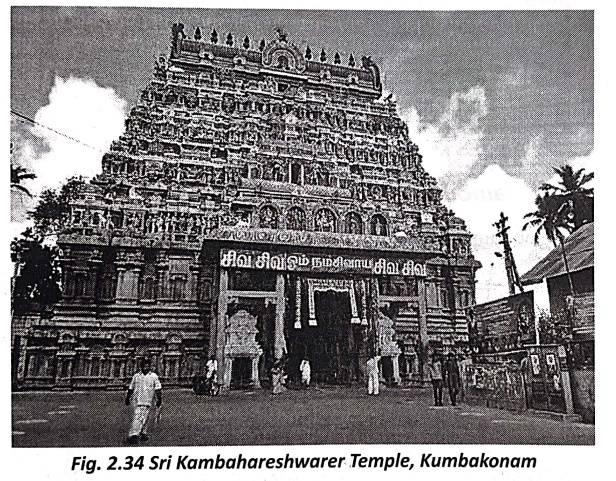
9. Sri Kambahareshwarar Temple, Kumbakonam
Sri
Kambahareshwarar Temple is located at Tirubuvanam village near Kumbakonam. The
construction work of this temple was started by the King Kulothungan who ruled
over in the 13th Century. The kings of Chera, Chola, Pandiya dynasties who came
after him continued the work and completed the construction. Historians believe
that this was the last temple renovated by the Cholas.
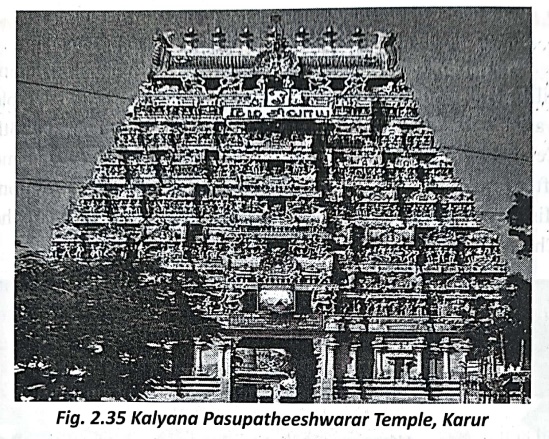
10. Kalyana Pasupatheeshwarar Temple, Karur
The
Kalyana Pasupatheeshwarar Temple was built during the reign of the Cholas. This
temple is famous for its five feet tall Pasupatheeshwarar Lingam. There is also
a cluster of five idols found here. The lingam appears in the Sanctum Sanctorum
as bathed in the milk flowing from the udder of a cow.
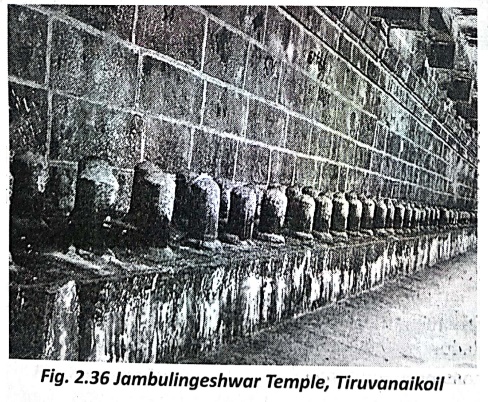
11. Jambulingeshwar Temple, Tiruvanaikaval
The
Jambulingeshwar Temple at Tiruvanaikaval is believed to have been built by king
Kochenga Chola, one of the early Chola kings. In addition to that, some
inscriptions written during the Chola period are still visible on the temple
walls.
Although
the temple was built 1800 years ago, it is still in good condition due to the
maintenance work. An underground water spring was discovered under the
Jambukeshwar Sanctum. Every time it is tried to empty the water source, again
and again, it fills up.
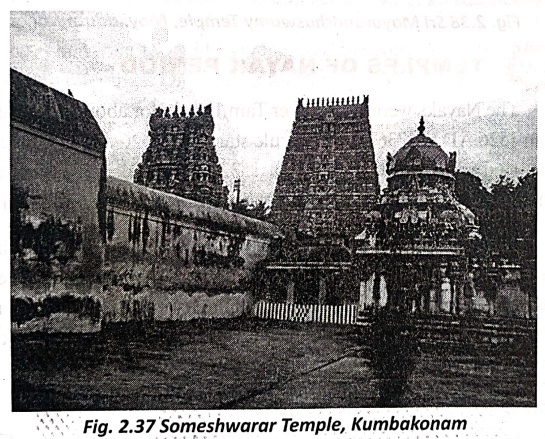
12. Someshwarar Temple, Kumbakonam
Someshwarar
Temple is located in Kumbakonam. When looking at the architechtural design of
this temple, it must have been built before the 13th Century. It was during
this period, that the later Cholas were ruling over Kumbakonam. Actually, this
temple was originally built by the Cholas who worshipped Lord Shiva and Goddess
Parvathi. Later Kings added different designs to the construction of the
temple. But the basic design is Chola architecture.
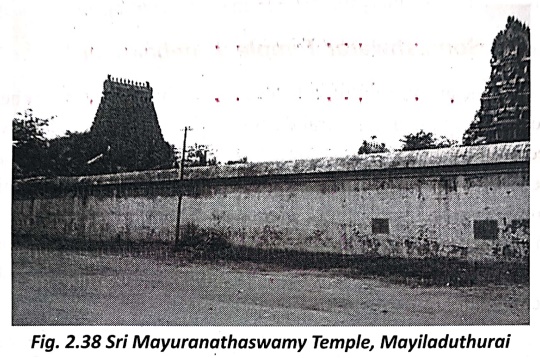
13. Sri Mayuranathaswamy Temple, Mayiladuthurai
Sri
Mayuranathaswamy Temple is the largest temple in Mayiladuthurai. The oldest
records on the walls of this temple are those of Kulothunga Chola. Slightly
reconstructed after its initial construction, the temple still stands a
testament to Chola architecture. The Mayura Natyanjali program held every year
for Lord Nataraja of this temple attracts countless people to this temple.
Tamils and Technology: Unit II: Design and Construction Technology : Tag: Tamil : Tamils and Technology - Great Temples and other places of worship of the Chola period
Tamils and Technology: Unit II: Design and Construction Technology
Under Subject
Tamils and Technology தமிழர்களும் தொழில்நுட்பமும்
UC25H02 2nd Semester | 2025 Regulation | 2nd Semester 2025 Regulation
Related Subjects
English Essentials II
EN25C02 2nd Semester | 2025 Regulation | 2nd Semester 2025 Regulation
Tamils and Technology தமிழர்களும் தொழில்நுட்பமும்
UC25H02 2nd Semester | 2025 Regulation | 2nd Semester 2025 Regulation
Linear Algebra
MA25C02 2nd Semester | 2025 Regulation
Transforms and its Applications
MA25C03 2nd Semester EEE Dept | 2025 Regulation | 2nd Semester 2025 Regulation

Applied Physics (CE) II
PH25C02 2nd Semester Civil, Agri Depts | 2025 Regulation | 2nd Semester 2025 Regulation
Applied Physics (CSIE) II
PH25C03 2nd Semester AIDS, CSE, IT, CSE(CY) Dept | 2025 Regulation | 2nd Semester 2025 Regulation
Applied Physics (EE) II
PH25C04 2nd Semester EEE Dept | 2025 Regulation | 2nd Semester 2025 Regulation

Applied Physics (ME) II
PH25C05 2nd Semester Mechanical Dept | 2025 Regulation | 2nd Semester 2025 Regulation
Applied Chemistry (CE) II
CY25C02 2nd Semester Civil Dept | 2025 Regulation | 2nd Semester 2025 Regulation

Applied Chemistry (ME) II
CY25C03 2nd Semester Mechanical Dept | 2025 Regulation | 2nd Semester 2025 Regulation

Electron Devices
EC25C01 2nd Semester ECE Dept | 2025 Regulation | 2nd Semester 2025 Regulation
Digital Principles and Computer Organization
CS25C06 2nd Semester AIDS, CSE, IT, CSE(CY) Dept | 2025 Regulation | 2nd Semester 2025 Regulation

Basic Electrical and Electronics Engineering
EE25C01 2nd Semester | 2025 Regulation | 2nd Semester 2025 Regulation

Basic Civil and Mechanical Engineering
GE25C01 2nd Semester EEE Dept | 2025 Regulation | 2nd Semester 2025 Regulation
Data Structures using CPlusPlus
CS25C05 2nd Semester ECE Dept | 2025 Regulation | 2nd Semester 2025 Regulation
Engineering Drawing
ME25C01 EEE, Mech, Agri, EEE Depts | 2025 Regulation | 2nd Semester 2025 Regulation
Data Structures and Algorithms
CS25C04 2nd Semester EEE Dept | 2025 Regulation

Circuits and Network Analysis
EC25C02 2nd Semester ECE Dept | 2025 Regulation | 2nd Semester 2025 Regulation

Engineering Mechanics
ME25C02 2nd Semester Mech, Civil, Agri Depts | 2025 Regulation | 2nd Semester 2025 Regulation
Object Oriented Programming (OOPs)
CS25C07 2nd Semester CSE, CSE(CY) Depts | 2025 Regulation | 2nd Semester 2025 Regulation