Electron Devices: Chapter 4: Bipolar Junction Transistors
Introduction of BJT
Bipolar Junction Transistors
Questions: 1. What is transistor? 2. Explain the word transistor. 3. What are the types of transistors ? 4. What are the types of BJT? 5. State the advantages of a transistor. 6. What is the major difference between a bipolar and unipolar device?
Electron Devices
Chapter
4:
Bipolar
Junction Transistors
Introduction
•
Transistor is a three terminal device : Base, emitter in three be can operated
configurations common base, common emitter and common collector.
•
According to configuration it can be used for voltage as well as current
amplification.
•
The amplification in the transistor is achieved by passing input current signal
from a region of low resistance to a region of high resistance. This concept of
transfer of resistance has given the name TRANSfer‒resISTOR (TRANSISTOR).
Types of Transistors
•
There are two types of transistors : Unipolar junction transistor and bipolar
junction transistor.
•
In unipolar transistor, the current conduction is only due to one type of
charge carriers, majority carriers.
•
The current conduction in bipolar transistor is because of both the types of
charge carriers, holes and electrons. Hence this is called Bipolar Junction
Transistor, hereafter referred to as BJT.
•
In BJT output current is controlled by input current and hence it is a current
controlled device.
Types of BJT
1.
n‒p‒n type
2.
p‒n‒p type
Advantages of BJT
1.
Low operating voltage
2.
Higher efficiency
3.
Small size and ruggedness and
4.
Does not require any filament power
Review
Questions
1. What is transistor?
2. Explain the word transistor.
3. What are the types of transistors ?
4. What are the types of BJT?
5. State the advantages of a transistor.
6. What is the major difference between a bipolar and unipolar
device?
Electron Devices: Chapter 4: Bipolar Junction Transistors : Tag: electronics : Bipolar Junction Transistors - Introduction of BJT
Electron Devices: Chapter 4: Bipolar Junction Transistors
Under Subject

Electron Devices
EC25C01 2nd Semester ECE Dept | 2025 Regulation | 2nd Semester 2025 Regulation
Related Subjects
English Essentials II
EN25C02 2nd Semester | 2025 Regulation | 2nd Semester 2025 Regulation
Tamils and Technology தமிழர்களும் தொழில்நுட்பமும்
UC25H02 2nd Semester | 2025 Regulation | 2nd Semester 2025 Regulation
Linear Algebra
MA25C02 2nd Semester | 2025 Regulation
Electron Devices
EC25C01 2nd Semester ECE Dept | 2025 Regulation | 2nd Semester 2025 Regulation
Data Structures using CPlusPlus
CS25C05 2nd Semester ECE Dept | 2025 Regulation | 2nd Semester 2025 Regulation

Circuits and Network Analysis
EC25C02 2nd Semester ECE Dept | 2025 Regulation | 2nd Semester 2025 Regulation

Re-Engineering for Innovation
ME25C05 2nd Semester | 2025 Regulation | 2nd Semester 2025 Regulation
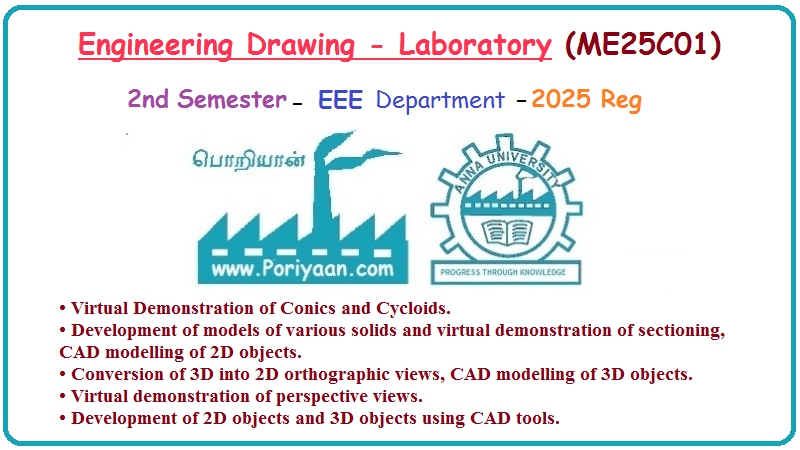
Engineering Drawing - Laboratory
ME25C01 2nd Semester | 2025 Regulation | 2nd Semester 2025 Regulation
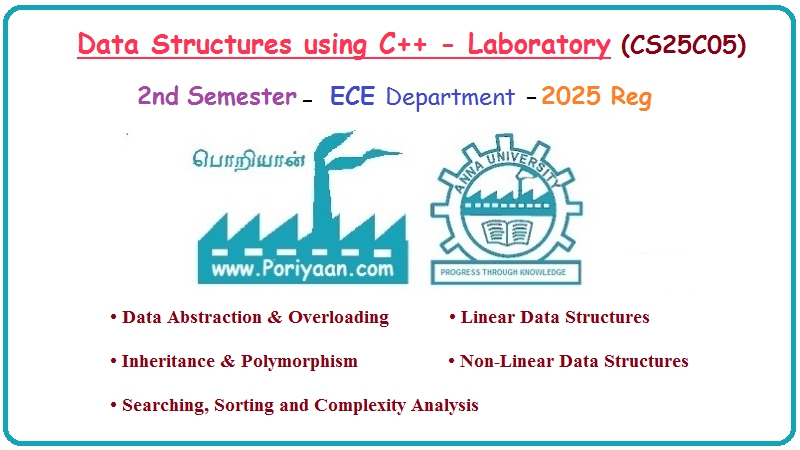
Data Structures using CPlusPlus - Laboratory
CS25C05 2nd Semester ECE Dept | 2025 Regulation | 2nd Semester 2025 Regulation
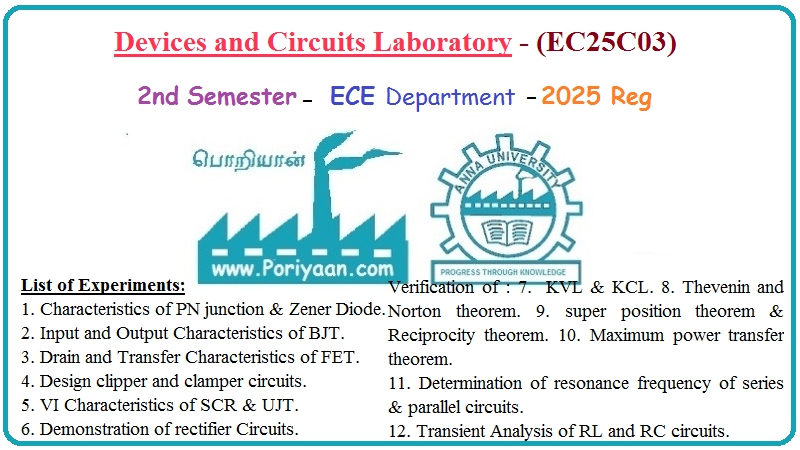
Devices and Circuits Laboratory
EC25C03 2nd Semester ECE Dept | 2025 Regulation | 2nd Semester 2025 Regulation